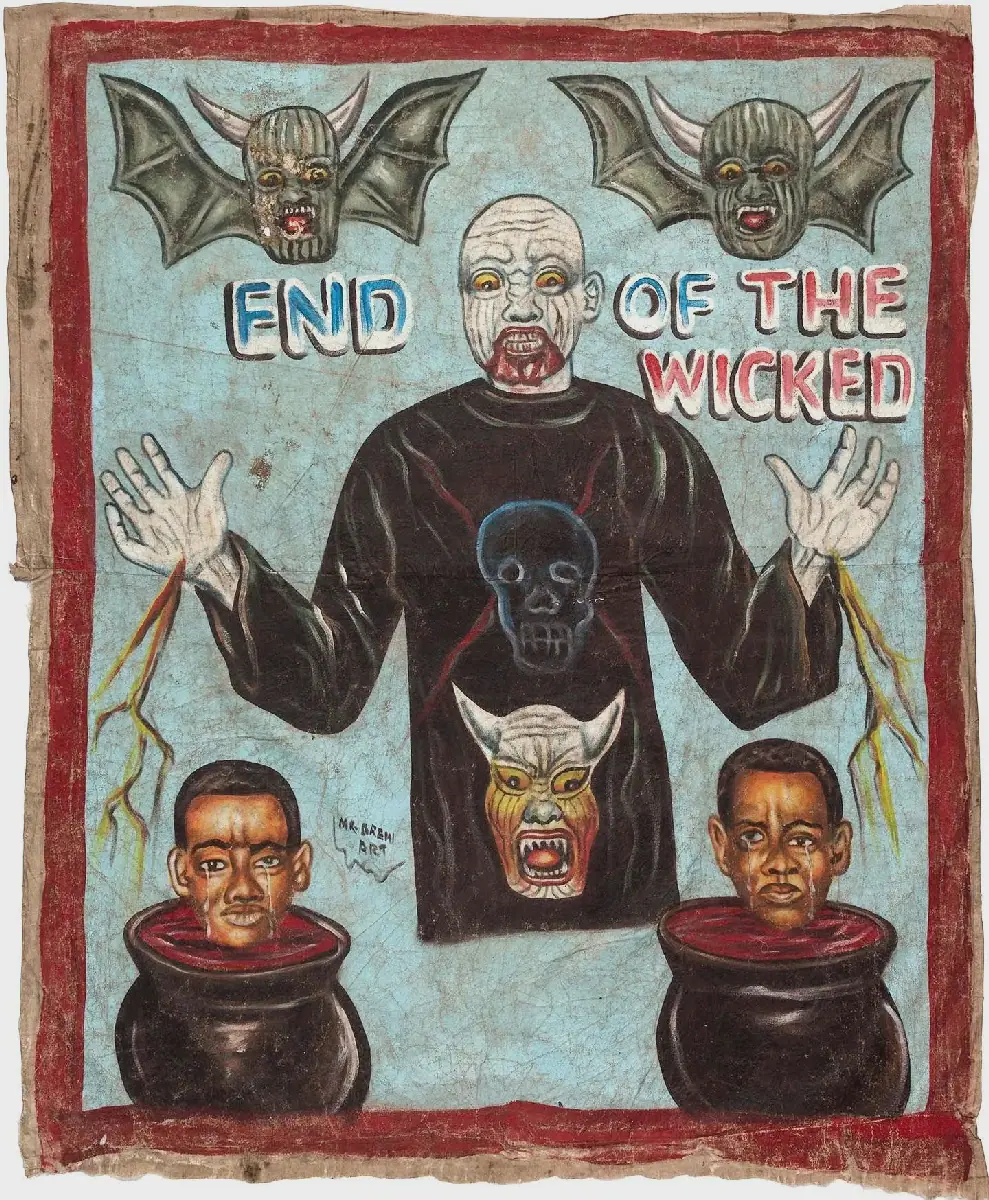
End of the Wicked, a 1999 Nigerian horror film directed by Teco Benson, has become a cult classic across West Africa. The film, written and produced by Pastor Helen Ukpabio, tells the story of a family under attack by a circle of witches. As the forces of darkness take over the souls of family members, including children, they become agents of evil and turn against their parents. The film follows a pastor as she leads a spiritual battle against the forces of evil.
The film features a mix of family drama, handmade special effects, and a strong religious message, typical of Nigerian video cinema from the 1990s. It stars Charles Okafor, Hilda Dokubo, and Alex Usifo Omiagbo as Beelzebub, with Helen Ukpabio playing the role of the pastor. The film also features a young Ramsey Nouah, who has since become a prominent figure in Nigerian cinema.
Despite its cult status, End of the Wicked has been embroiled in controversy. Pastor Helen Ukpabio, the founder of Liberty Foundation Gospel Ministries, an evangelical church in Calabar, Nigeria, has been accused of contributing to the rise in witchcraft accusations against children in Nigeria in the late 1990s and early 2000s. The film's depiction of children being possessed by the devil has been cited as a factor in the brutal treatment of children accused of witchcraft.
Several child protection organizations and journalists have criticized the film for its role in perpetuating witchcraft accusations against children. In 2007, a report by the British newspaper The Observer implicated Pastor Helen Ukpabio and other evangelical pastors in this phenomenon. Human rights activist Leo Igwe has been a vocal critic of the accusations, making it a long-standing campaign.
The controversy surrounding End of the Wicked has not diminished its impact on West African popular culture. The film is often cited as one of the most influential horror films from Nigeria, alongside Karishika and 666 (Beware the End Is at Hand). Its scenes have been turned into memes, analyzed on YouTube, and humorously reviewed by Nigerian media.
End of the Wicked remains widely available online, often uploaded by unofficial channels on YouTube in its original English version. However, viewers are cautioned that the film contains violent scenes involving children and is not suitable for young audiences.
The legacy of End of the Wicked serves as a case study on how popular media can reinforce beliefs with real-world consequences. As a cultural artifact, it provides insight into the early years of Nollywood and the enduring influence of traditional beliefs in West African societies.
Key points
- End of the Wicked has been accused of contributing to the rise in witchcraft accusations against children in Nigeria.
- The film's depiction of children being possessed by the devil has been cited as a factor in the brutal treatment of children accused of witchcraft.
- Despite controversy, End of the Wicked remains a cult classic in West African popular culture.