As the 2026 South African municipal elections approach, citizens are being encouraged to look beyond party promises and demand transparency, meaningful change, and better services from their leaders. The elections, set to take place on November 4, 2026, will elect councils for all district, metropolitan, and local municipalities across the country's nine provinces. Voter turnout in South Africa has been decreasing since 1994, with many citizens expressing indifference and disappointment in the government's performance.
The forthcoming municipal elections are significant, as local government is intended to be the sphere of governance closest to the people and most responsive to their daily needs. However, many municipalities face severe financial distress, patronage networks, and factional political appointments, leading to deteriorating basic service delivery. Sewage flows through residential areas, communities endure water shortages, roads fall into disrepair, and refuse accumulates in public spaces, further eroding public trust.
Discussions around elections often focus on declining voter participation and eroding public trust in the political system. The gradual decrease in voter turnout since 2009 is a critical concern, signaling growing disillusionment with South Africa's electoral system and escalating distrust of politics and political parties. To address this, citizens must adopt a different perspective on electoral participation, recognizing that voting is not just an endorsement of a party but a means of exercising democratic rights and shaping the country's future.
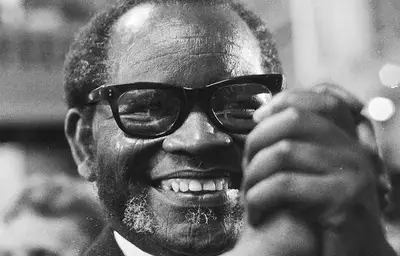
Oliver Reginald Kaizana Tambo, a South African anti-apartheid politician, is a powerful example of principled leadership and perseverance. Born on October 27, 1917, Tambo led the African National Congress (ANC) from 1967 to 1991 and co-founded the ANC Youth League. His leadership extended beyond South Africa's borders, building strategic alliances and mobilizing diplomatic pressure to persuade governments that apartheid was an international moral, political, and humanitarian crisis.
Tambo's legacy serves as a reminder that meaningful change requires perseverance, principled leadership, and courage. Despite immense challenges and uncertainties, he remained committed to justice and freedom, demonstrating resilience and determination. His leadership during the 1969 Morogoro Consultative Conference in Tanzania showcased the importance of collective leadership, resilience, and constructive engagement in times of crisis.
Recent events have shown that pressure for improved service delivery and social change often arises from active citizen participation, including collective organization, peaceful protest, and engagement with public officials. Voting represents the minimum threshold of democratic participation and should not be disregarded. Instead, it should be recognized as a fundamental means through which citizens exercise their agency and contribute to shaping their communities' and the nation's future.
The life and leadership of OR Tambo continue to offer enduring lessons on perseverance, principled leadership, and the pursuit of social justice. His commitment to the anti-apartheid struggle exemplified resilience, courage, and dedication to freedom and equality. The current generation is called upon to demonstrate a similar commitment to economic inclusivity, economic freedom, and sustainable development, requiring collective action to address persistent inequalities and create a more prosperous and equitable future.
Key points
- Citizens are urged to emulate OR Tambo's values of selflessness, unity, and determination to demand better governance and service delivery.
- The 2026 municipal elections are significant, as local government is intended to be the sphere of governance closest to the people and most responsive to their daily needs.
- Meaningful change requires perseverance, principled leadership, and courage, as exemplified by OR Tambo's leadership during the anti-apartheid struggle.