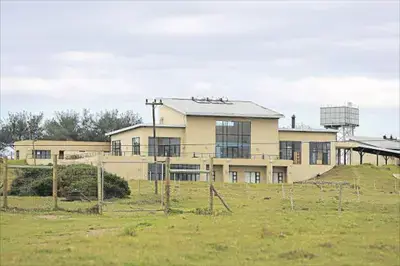
The Ngqushwa Municipality's plan to revive the R40m Emthonjeni arts facility in Hamburg by leasing it to private investors has sparked fierce opposition from local residents. The facility, which was opened in 2013 with state funding to boost tourism, was liquidated and closed within a year due to financial collapse. Residents argue that they were sidelined from crucial land decisions and demand a direct say in the future of what they consider communal property.
The Emthonjeni Arts artists' retreat centre was built by the Amathole District Municipality's economic development arm Aspire as a creative hub for national and international artists. The centre, which has 22 upmarket bedrooms, a gallery, dance studios and multimedia spaces, was designed to attract artists, dancers and recording artists to work alongside Eastern Cape creatives. However, barely a year after its official opening, the project was wound up at the high court in KuGompo City amid concerns about its finances.
The Ngqushwa Municipality is seeking to lease portions of the property to private investors for periods of up to five years, with proposals including a recreational centre and a health and wellness facility. The plans were outlined in a public notice inviting objections to the proposals. The notice, issued following a council resolution on August 28, also identifies two portions of Erf 93 in Hamburg commonage for leasing: one measuring 5ha for agricultural expansion on a five-year lease, and another for a place of worship on a three-year lease.
Members of the Hamburg community's executive committee and business forum say residents have not been adequately consulted and should have a say in decisions involving land they regard as community property. In correspondence to municipal manager Ndoda Mgengo, the executive committee wants full details of the proposed leases and what it describes as a potential sale of Emthonjeni. Committee chair Nomthandazo Mapuma said residents believe the land was given to the Amathole District Municipality for development before being returned to Ngqushwa when the district municipality relinquished it.
Mapuma said residents had previously considered subdividing the land among young people but abandoned the idea after being told that development was planned for the area. They had instead agreed to identify alternative land. Residents were also interested in being involved in the centre's development, with Mapuma stating that they have people in their community who are interested in running it or undertaking development so their children can also benefit and have opportunities for employment.
Ngqushwa mayor Sanga Maneli rejected suggestions that the municipality intended to sell the land, saying it wanted to lease the facility to an investor with the skills and resources to run it. Maneli said leasing the property would generate income and that potential investors had expressed interest, but the municipality was following the required processes, including giving the public an opportunity to object before a final decision was made.
The dispute over the Emthonjeni facility is not the first over land in Hamburg, with a similar dispute in 2021 over plans by the department of public works to lease and develop 33 properties for revenue generation. The dispute over ownership has its roots in changes of government, first when the Ciskei government took over in 1961 and again in 1994. Residents are concerned about the loss of community ownership and want local entrepreneurs and youth to benefit directly from any new development.
Key points
- Residents of Hamburg oppose the Ngqushwa Municipality's plan to lease the Emthonjeni arts facility to private investors.
- The municipality's plan aims to curb vandalism and generate revenue, but residents fear loss of community ownership.
- The dispute over the Emthonjeni facility is linked to a longer history of contested land ownership in Hamburg.