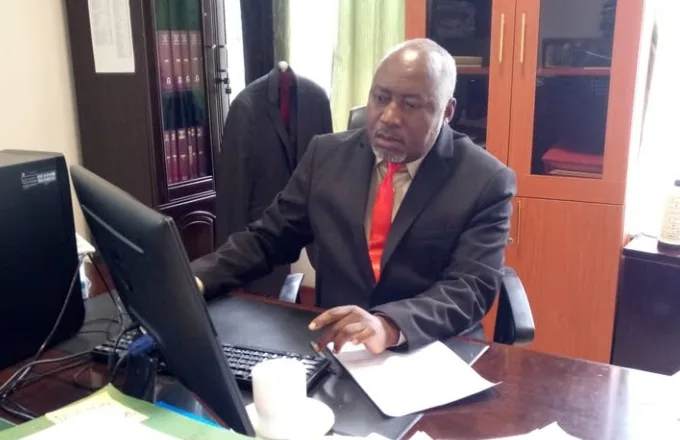
The Employment and Labour Relations Court of Kenya has issued a permanent injunction preventing the Judicial Service Commission (JSC) from pursuing removal proceedings against Environment and Land Court Judge Anthony Ombwayo. This decision was made by a three-judge bench consisting of Justices Jemimah Wanza Keli, Onesmus Makau, and Dr. Jacob Gakeri. The court's ruling was based on the finding that the complaint against Judge Ombwayo did not meet the constitutional requirements for a removal petition under Article 168 of the Kenyan Constitution.
The complaint against Judge Ombwayo originated from two cases in Nakuru, where litigant Juma Okumu had sought the judge's recusal. Judge Ombwayo dismissed Okumu's recusal applications, prompting Okumu to appeal and request a stay. The Court of Appeal denied the stay in January 2026. Despite this decision, the JSC admitted the complaint for an oral hearing, asserting that it disclosed sufficient grounds for further inquiry under Article 168. Judge Ombwayo contested this move as an overreach of the Commission's jurisdiction.
The court ruled that a letter from Okumu's lawyers, dated March 14, 2025, did not satisfy the constitutional requirements for a removal petition. The letter, addressed to the Chief Justice, was framed as a request for administrative intervention rather than a formal petition for removal. Therefore, it could not be forwarded to President William Ruto for consideration. The court concluded that the JSC had acted without jurisdiction by treating the March 2025 letter as a removal petition.
Representing Judge Ombwayo was lawyer Neville Amolo, while the JSC was represented by lawyer Owiti. The court found that the JSC's actions breached Judge Ombwayo's right to fair administrative action under Article 47 and infringed judicial independence. The bench noted that challenges to a judge's decisions should proceed through appeal or review, not removal proceedings.
The court's decision was based on a thorough examination of the complaint and the JSC's actions. The bench held that the JSC had failed to follow the proper procedures for initiating removal proceedings against a judge. By treating the March 2025 letter as a removal petition, the JSC had overstepped its authority.
In its final order, the court declared that no valid Article 168 petition had been presented against Judge Ombwayo. The court permanently restrained the JSC from moving the complaint forward or submitting it to the President. Each party was ordered to bear its own costs, citing the public interest at stake.
The Employment and Labour Relations Court's decision has significant implications for the JSC and the judiciary as a whole. The court's ruling underscores the importance of following proper procedures in removal proceedings against judges. It also highlights the need for the JSC to respect judicial independence and the rights of judges to fair administrative action.
Key points
- The Employment and Labour Relations Court has halted the JSC's attempt to remove Judge Anthony Ombwayo, citing procedural flaws in the complaint.
- The court's decision was based on the finding that the complaint did not meet the constitutional requirements for a removal petition under Article 168.
- The ruling has significant implications for the JSC and the judiciary, underscoring the importance of following proper procedures in removal proceedings against judges.