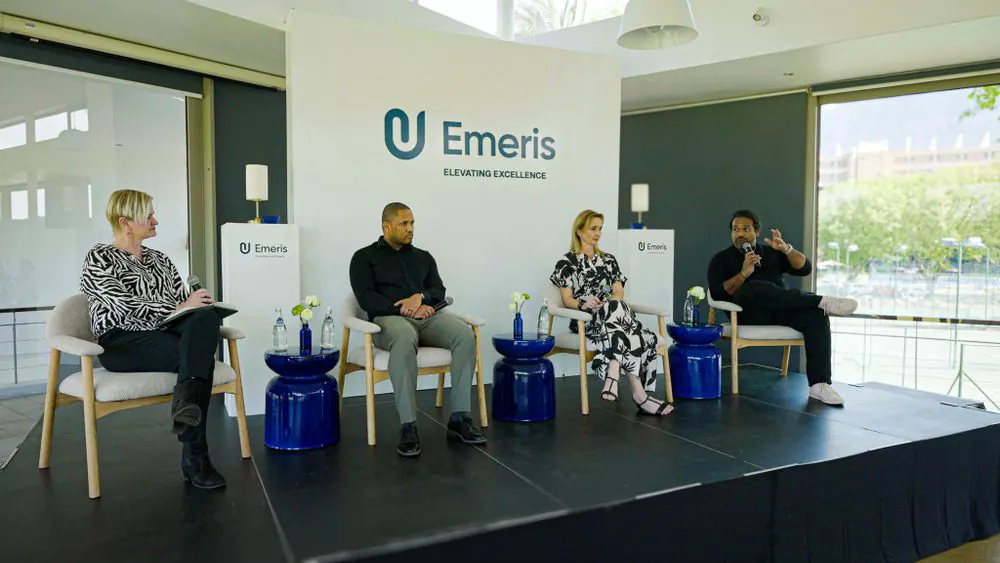
Emeris, an educational brand of the Independent Institute of Education, recently hosted a panel discussion in Cape Town to explore the potential of artificial intelligence (AI) in creating greater access to opportunity in South Africa. The discussion, titled The Skills and Education Dialogue, brought together experts from the education and industry sectors to examine the impact of AI on education, skills, and jobs. The event marked Emeris' one-year milestone and reflected on the role of education in preparing young people for a changing world of work.
The panel discussion featured Alex Pryor, Founder and CEO of Top Pryority; Dr. Andre Abrahams, Executive Dean: Academics at Emeris; Louise Wiseman, Managing Director of Emeris; and Chesare Pillay, Head of Partnerships and Technology at CAPACITI. They shared their perspectives on the changing relationship between education, technology, and the world of work. The discussion aimed to look beyond the hype surrounding AI and explore its practical implications for education, skills, and jobs in South Africa.
According to Chesare Pillay, the role of higher education must evolve beyond simply transferring knowledge. He emphasized that it must help people think critically, create, adapt, and distinguish themselves in a world where technology is increasingly transforming the way we work. Pillay noted that while technology may transform education, people remain at its center. This sentiment was echoed by the other panelists, who stressed the need for a more nuanced approach to education that prepares students for the challenges of the modern workplace.
The Independent Institute of Education, which owns the Emeris brand, is a registered private higher education institution with the Department of Higher Education and Training. The institute has a strong focus on providing high-quality education that meets the needs of a rapidly changing world. By hosting events like The Skills and Education Dialogue, Emeris aims to foster a deeper understanding of the issues shaping the education landscape in South Africa.
The discussion also touched on the need for stronger pathways from education into meaningful opportunities. Panelists emphasized that this requires a rethinking of teaching and learning approaches to ensure that students are equipped with the skills and competencies required to succeed in the modern workplace. This includes developing critical thinking, problem-solving, and creativity skills, as well as fostering a growth mindset and a love of lifelong learning.
Emeris' focus on exploring the intersection of education, technology, and work is timely, given the rapid pace of change in the world of work. As AI continues to reshape the job market, there is a growing need for education systems that can adapt to these changes and provide students with the skills and competencies required to thrive. By bringing together experts from different sectors, Emeris aims to contribute to a more informed and nuanced conversation about the future of education in South Africa.
The outcomes of The Skills and Education Dialogue are expected to inform Emeris' future initiatives and programs, which will aim to support the development of a more responsive and effective education system in South Africa. Key to this effort will be the collaboration between education and industry stakeholders to ensure that students are equipped with the skills and competencies required to succeed in the modern workplace.
Key points
- Emeris aims to create a more responsive education system that prepares students for the challenges of the modern workplace.