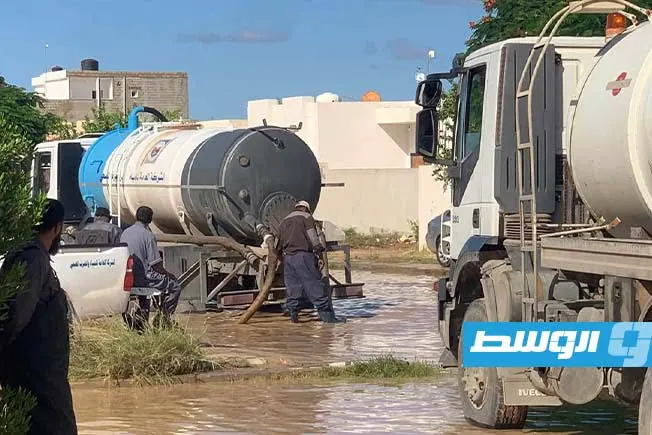
Emergency teams in Libya, affiliated with the General Company for Water and Sanitation, are continuing their efforts to address rainwater accumulations and blockages in six regions. These regions include Gharyan, Al-Asabah, Mizdah, Sirte, Al-Harsha, and Al-Jalidah. The teams are working to pump out water and clear sewage networks as part of their response to recent rainfall.
In Gharyan and Al-Asabah, teams have been actively engaged in pumping out water and clearing sewage chambers. In Gharyan, work has focused on areas including Street Al-Bareed and several points along the main road. The goal is to reduce water accumulation and facilitate movement for residents and vehicles. In Al-Asabah, teams have collaborated with local authorities to address waterlogging, particularly around Al-Asabah Hospital and key points on the main road.
The city of Sirte has also seen significant intervention, with emergency teams working to clear blockages caused by rainfall in the 700 neighborhood. The area lacks adequate infrastructure for rainwater drainage, necessitating the use of suction tankers to manage water accumulations. Meanwhile, in Mizdah, teams have been pumping out water from within the security directorate and at several points on the main road to minimize traffic disruptions.
In Al-Harsha, emergency teams have been working to clear a rainwater blockage and have installed a new submersible pump at a rainwater collection tank near the passport office. This effort aims to improve water management in the area. Al-Jalidah has also seen teams from the Al-Jafarah office working to pump out rainwater accumulations and address blockages, contributing to better traffic flow and reduced impact from the rainfall.
The General Company for Water and Sanitation has emphasized its commitment to maintaining a high level of readiness and responsiveness to public reports, particularly during periods of adverse weather. The company continues to work on clearing rainwater blockages across various regions. This proactive approach aims to mitigate the effects of rainfall and ensure public safety and convenience.
The interventions in these regions demonstrate a coordinated effort to manage the aftermath of rainfall and prevent potential hazards. By addressing water accumulations and blockages, emergency teams are helping to restore normalcy and support community activities. The work is being carried out in challenging conditions, highlighting the dedication and resilience of the teams involved.
As weather conditions continue to pose challenges, the role of emergency teams in maintaining public infrastructure and safety is crucial. The ongoing efforts in Gharyan, Al-Asabah, Mizdah, Sirte, Al-Harsha, and Al-Jalidah reflect a broader commitment to disaster response and recovery in Libya. The situation remains a priority for authorities and emergency responders.
Key points
- Emergency teams are working in 6 regions to pump out rainwater and clear blockages.
- The efforts aim to reduce water accumulation, facilitate movement, and ensure public safety.
- The interventions demonstrate a coordinated approach to managing the aftermath of rainfall in Libya.