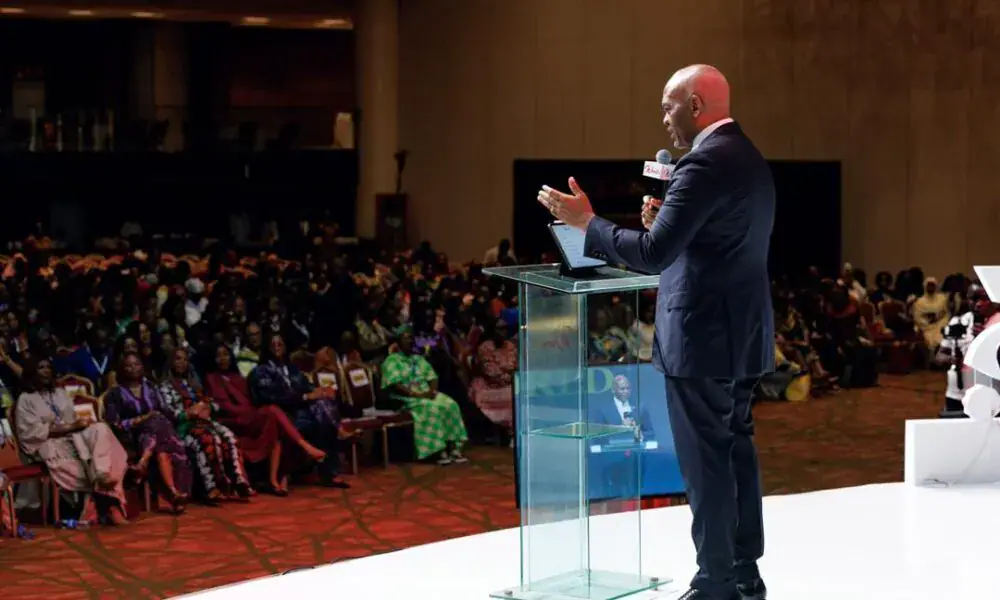
Tony O. Elumelu, Chairman of Heirs Holdings and Transcorp Group, has called for a fundamental shift in Africa's development strategy, prioritizing human capital, indigenous investment, industrialization, and inclusive economic opportunities. Speaking at the 25th annual conference of the Women in Management, Business and Public Service (WIMBIZ) in Lagos, Elumelu emphasized that Africa's greatest asset is not its natural resources, but its people, particularly its young population and women. He argued that the continent possesses the resources, demographic advantage, and entrepreneurial talent to become the world's most important growth frontier.
Elumelu identified power, value creation, and capital as three critical requirements for unlocking Africa's potential. He stressed that reliable electricity remains fundamental to industrialization and the development of an artificial intelligence-driven economy. According to him, factories, hospitals, schools, and technology businesses cannot function effectively without dependable electricity and connectivity. Elumelu also challenged African countries to reconsider their dependence on exporting unprocessed commodities, insisting that the continent must develop the capacity to refine, process, and brand its natural resources before selling them to international markets.
The business leader emphasized the need to mobilize domestic capital, arguing that Africa's development should increasingly be financed by African investors rather than relying excessively on foreign aid. He maintained that although development assistance has played a role in supporting vulnerable populations, sustainable economic transformation will require investment, trade, and the mobilization of savings through pension funds, insurance companies, banks, and family offices. Elumelu cited developments in the Nigerian capital market, referencing his group's investment in Seplat Energy, which has seen its share price rise from £3 to £9 since the investment.
Elumelu also highlighted the Tony Elumelu Foundation's commitment to entrepreneurship, with over $130m in disbursements representing an investment in young Africans and the continent's economic future. He identified intra-African trade as another major requirement for unlocking economic opportunities, lamenting that it remains easier to transport goods from Lagos to Liverpool than from Lagos to Luanda. Elumelu urged African businesses to regard the continent as their natural home market, while calling on financial institutions to support cross-border expansion and manufacturers to develop regional supply chains.
On inclusive prosperity, Elumelu argued that women's participation in economic leadership is not simply a question of fairness but a fundamental requirement for competitiveness and sustainable development. He disclosed that he and his wife, Dr. Awele Elumelu, have committed more than $120m in seed capital to 24,633 young entrepreneurs across all 54 African countries through the Tony Elumelu Foundation over the past 15 years. Women account for 48 percent of the beneficiaries, while the entrepreneurs have collectively created more than 1.5 million jobs and generated over $4.2bn in revenue.
Elumelu reflected on his experience building United Bank for Africa into a pan-African financial institution operating across 20 African countries, demonstrating that businesses can successfully overcome the barriers associated with operating across national borders. He commended Aliko Dangote for mobilizing African retail investors through innovative approaches to the proposed Dangote Refinery initial public offering, describing such initiatives as evidence of a new direction in African capital formation.
The Heirs Holdings chairman concluded by emphasizing that Africa's growing working-age population, mineral resources, agricultural potential, and expanding consumer market represent the century's greatest commercial opportunity. However, he warned that these advantages will remain unrealized without deliberate investments in productive capacity, infrastructure, and human capital. Elumelu's call to action emphasizes the need for a coordinated effort from governments, investors, and business leaders to prioritize Africa's people and unlock the continent's economic potential.
Key points
- Elumelu emphasizes the need for reliable electricity, value creation, and capital to unlock Africa's potential.
- He advocates for a shift in Africa's development strategy, prioritizing human capital, indigenous investment, and industrialization.
- The Tony Elumelu Foundation has committed over $130m to entrepreneurship, supporting young Africans and the continent's economic future.
Reporting sources
- Africa’s Greatest Asset s its People, not oil or minerals – Elumelu · Business Hallmark