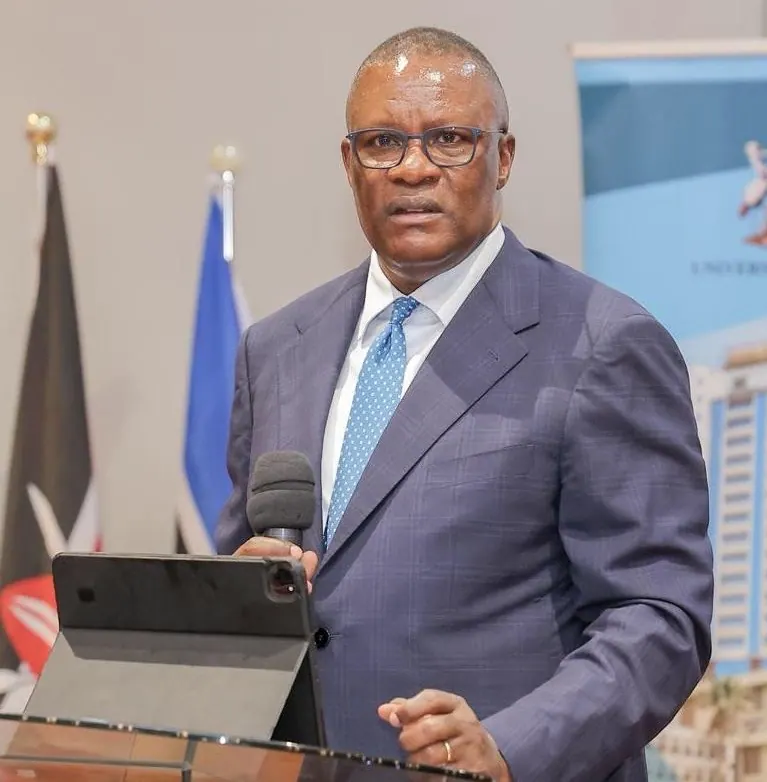
Former Cabinet Secretary and presidential hopeful Eliud Owalo has outlined his 2027 presidential bid, promising Kenyans economic transformation, lower taxes, digitalisation, accountability, and equitable development. Owalo, who served as the ICT CS and later Deputy Chief of Staff under President Ruto, believes his track record in governance and performance makes him the ideal candidate to lead Kenya's third and final liberation – economic emancipation. He claims Kenyans have expressed a desire for a technocrat manager as CEO, rather than legacy politicians.
Owalo's decision to leave his government job and contest the 2027 presidency was motivated by a desire to solve the challenges facing ordinary Kenyans. He believes his experience, skills, and capabilities make him equal to the task. Owalo has unveiled the People's Prosperity Party, with offices in 30 counties and officials in all 47, as he seeks to build a national, issue-oriented party. He emphasizes that Kenyans should elect leaders based on their track record and agenda, rather than community, church, or wealth.
Owalo criticizes the current state of the economy under the Ruto government, stating that it is not doing well and that basic inalienable rights must be addressed immediately. He proposes cutting income tax from 35% to 20%, VAT from 16% to 10%, and corporate tax by 5%, as well as abolishing digital tax. Owalo also plans to conduct a forensic audit of public debt and reopen mega corruption cases under the 2010 Constitution.
The former CS highlights his achievements in digitalising 22,000 government services, raising daily revenue from Sh 60 million to Sh 1 billion. He aims to digitalise procurement, projects, and expenditure to seal leakages. Owalo also emphasizes the importance of education and health, proposing to finance free primary and day secondary education and re-engineer health for free services in public hospitals.
Owalo's agenda also includes creating youth opportunities through the digital and creative economy, training youth as entrepreneurs rather than job-seekers. He plans to direct resources to jua kali, youth, SMEs, and itinerary traders, rather than mega projects used to siphon funds. Owalo emphasizes the need for equitable resource distribution, citing that Kenya's wealth is concentrated in the hands of about 125 people.
Owalo addresses concerns about his relationship with President Ruto, stating that he is not working with him to spoil the Luo vote in 2027. He claims he openly worked with Ruto from 2019 and would have stayed in government until 2027 if he wanted to work with him. Owalo expresses willingness to work with transformational leaders but emphasizes that current formations are not what Kenyans will use in 2027.
Owalo concludes by calling on Kenyans to elect him President in 2027, promising to lead the country's economic emancipation. He highlights his track record of trustworthiness, citing the Ethics and Anti-Corruption Commission's finding that his ministry was the least corrupt. Owalo's education background includes attending Oboch Primary, Maseno School, St Mary's Yala, Kenyatta University, and the University of Nairobi, where he earned his masters and PhD in strategic management.
Key points
- Owalo plans to cut income tax from 35% to 20% and VAT from 16% to 10% as part of his economic transformation agenda.