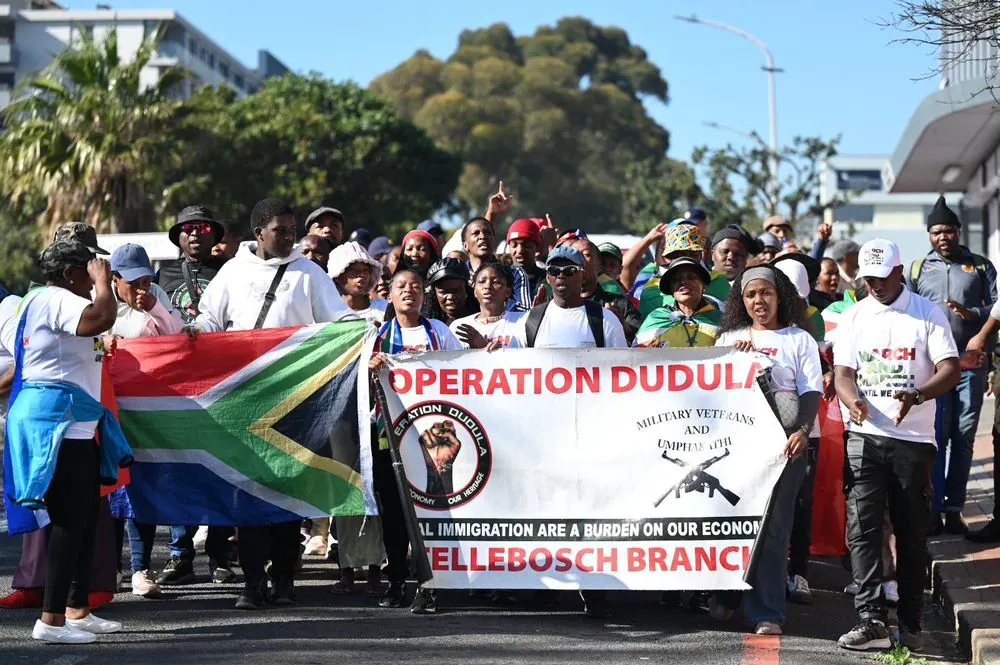
The Electoral Court of South Africa has dismissed an application by Operation Dudula for an extension to submit outstanding party lists and ward candidate nominations for the 2026 municipal elections. The party had missed the deadline of August 28 to complete some of its nominations and party lists. Operation Dudula had requested an additional 48 hours to complete the process, but the Electoral Commission of South Africa (IEC) refused, citing no legal basis for granting an individual extension.
According to the court's judgment, Operation Dudula's leadership dispute hindered its ability to access the IEC's online candidate nomination system. Solomon Kekana was registered as the party's leader and Online Party Administrator, but he had been suspended and expelled. This led to the party having no means of accessing the system to capture its candidates. Operation Dudula approached the IEC in May to change its records but was informed that a court order was required, which it obtained on August 27.
On the final day, Operation Dudula representatives visited the IEC's national office, Election House, to submit documents by hand, but were refused, as physical submissions were required at designated local representative offices. The party then received assistance with the online system and continued with its submissions, but the 5 pm deadline passed with some submissions remaining incomplete. The outstanding documents included party lists for Polokwane, eThekwini, and Cape Town, as well as certain ward candidate nominations in Tshwane and Johannesburg.
The Electoral Court found that election documents had to be submitted in the prescribed manner and within the specified period. The court relied on previous Constitutional Court findings emphasizing the importance of adhering to election deadlines. The judgment stated that the Commission does not have the power to condone non-compliance with the Electoral Act, Regulations, and Election Timetable, except in specific circumstances.
The court criticized Operation Dudula's election preparation, stating that it had allowed its leadership dispute to affect its functioning and had only received training on the IEC's online system on the final day. The judges rejected the party's argument that the IEC could grant a special extension. The court described Operation Dudula as "the author of its own misfortune" due to its internal disputes and lack of preparation.
The IEC's decision to refuse Operation Dudula's request for an extension was based on the party's failure to comply with the Electoral Act and the Election Timetable. The court upheld the IEC's decision, emphasizing that deadlines must be strictly adhered to. The judgment also noted that the party's officials had not familiarized themselves with the relevant legislative provisions regulating their participation in the upcoming municipal election.
The dismissal of Operation Dudula's application means that the party will not be able to participate in the 2026 municipal elections, at least not with the current list of candidates. The party's leadership dispute and lack of preparation have ultimately led to its exclusion from the electoral process. The IEC and the Electoral Court have emphasized the importance of adhering to election deadlines and regulations, ensuring the integrity of the electoral process.
Key points
- Operation Dudula's leadership dispute hindered its ability to access the IEC's online candidate nomination system.
- The Electoral Court found that election documents had to be submitted in the prescribed manner and within the specified period.
- The court criticized Operation Dudula's election preparation, stating that it had allowed its leadership dispute to affect its functioning.