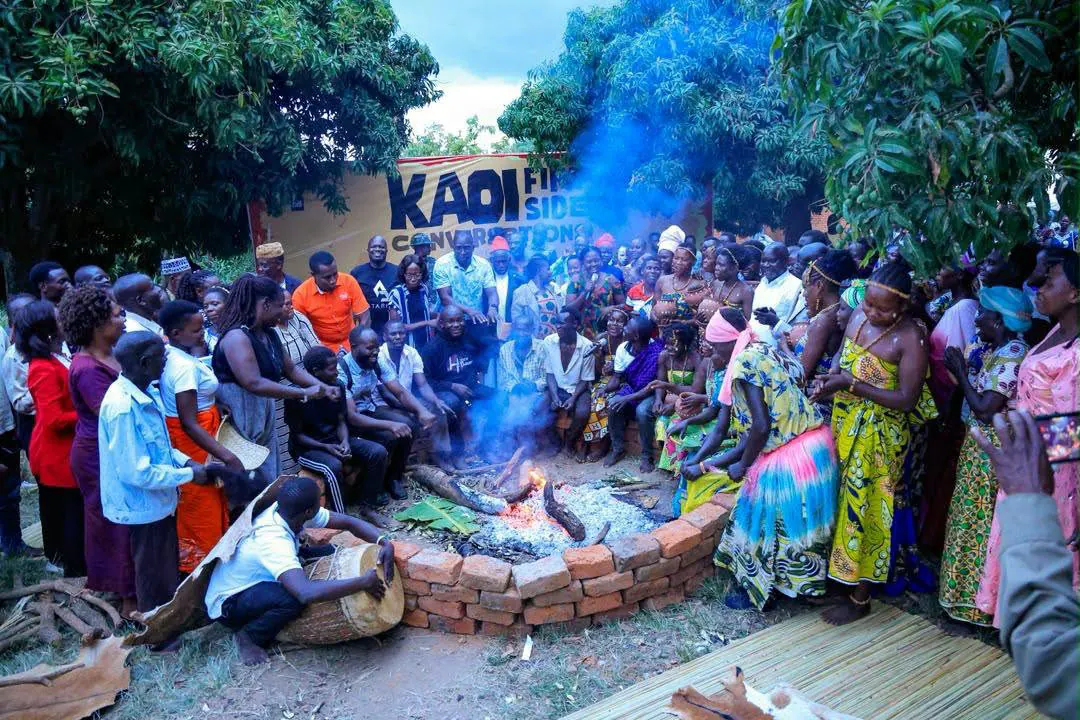
Elders from across East Africa have called for the revival of traditional community conversations, such as fireside gatherings, to discuss social values and guide younger generations. The gatherings, which were once an important part of raising young people, provided an opportunity for elders and young people to openly discuss issues that could be difficult to address within ordinary family settings. This initiative aims to reduce teenage pregnancies, which have become a major challenge in Uganda and Kenya.
The Kaoi Fireside Conversation, a traditional forum, brought together elders from various chiefdoms and communities from Kenya and Uganda in Nebbi District, Northern Uganda. The meeting was part of the Protect SRHR project, implemented by a consortium of civil society organizations, including Reach A Hand Africa, the International Rescue Committee, Humanity & Inclusion, and World Vision. The project is funded by the Embassy of the Kingdom of the Netherlands.
Prince Ochaya Orach Vincent, representing Chief Rwoth Justino Opar, head of Pawong Chiefdom and executive director of the Alur Kingdom, emphasized the importance of fireside gatherings in raising young people. He said these gatherings allowed elders and young people to discuss issues openly and work together to address challenges. The tradition, known as Kaoi Pa Aradu (youth fire) in the Alur community, is an essential part of their culture.
Nebbi mayor Japierwo Ronnie supported the revival of fireside conversations, stating that it could help communities rebuild the culture of sitting together and discussing challenges affecting young people. He noted that the social environment has changed significantly, with young people increasingly exposed to technology and social media. Reviving traditional gatherings can help address issues such as teenage pregnancy, which affects about 2% of girls in six schools in the area each year.
According to Albert Ongom, a programme officer at Reach A Hand Africa, teen pregnancy remains a major challenge in Uganda and Kenya, with a serious link to increased vulnerability to HIV infection. The 2022 Uganda Demographic and Health Survey reported that 23.5% of girls aged between 15 and 19 had begun childbearing, with 18.4% having already given birth and 5.1% pregnant with their first child. In Kenya, one in five girls aged between 15 and 19, roughly 18%, are either pregnant or have given birth.
Poverty, sexual violence, and inadequate reproductive health education have been blamed for the growing teenage pregnancy crisis across East Africa. The elders believe that some cultural practices that once helped prepare children for adulthood have weakened over time. The discussions in Nebbi sought to identify lessons from the traditional system that could be adapted to today's environment and address challenges such as weak parental involvement and limited inclusion of people with disabilities.
The elders' initiative aims to restore a community space where parents, elders, and young people can engage in conversations about issues affecting the lives and future of the younger generation. By reviving fireside conversations, they hope to reduce teenage pregnancies and address related challenges. The project also seeks to promote social values and guide younger generations in making informed decisions about their lives.
Key points
- Elders from Kenya and Uganda have called for a revival of traditional community conversations to address the rising teenage pregnancy crisis.
- The initiative aims to reduce teenage pregnancies by promoting social values and guiding younger generations.
- Poverty, sexual violence, and inadequate reproductive health education have contributed to the growing teenage pregnancy crisis in East Africa.