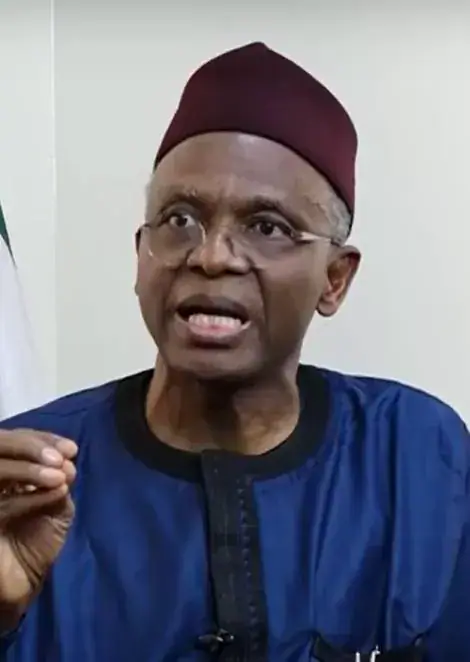
Detained ex-governor of Kaduna State, Nasir El-rufai, has made a U-turn in his claim that his administration tapped the phone of National Security Adviser (NSA), Nuhu Ribadu. El-rufai, who is standing trial by the Department of State Services (DSS) on allegations of intercepting Ribadu's phone conversations, among other offences, admitted that his claim was not factual but a mere political rhetoric. He made this admission while testifying as the first defence witness before a Federal High Court in Abuja.
El-rufai claimed that he knew the government placed surveillance on leading opposition figures, past presidents, and senior judges, among others. He stated that he elected to claim that someone tapped Ribadu's phone to create the impression that opposition figures were equally monitoring those in government. The ex-governor's lawyer, Paul Erokoro (SAN), played a recording of El-rufai's interview with Arise TV on February 13, where he made the claim, and asked him to clarify what he meant. El-rufai then admitted to making the claim but said it was not meant to be taken literally.
El-rufai explained that his statement was meant to convey that the government was monitoring opposition figures and that they knew what they were doing. He used the word "tap" as political rhetoric to make those in government uncomfortable, adding that it was a linguistic flourish and not meant to be taken literally. When reminded that his interviewer told him that it was illegal to tap someone's phone, El-rufai said his intention was to make it public that the government was secretly listening to opposition figures' conversations without lawful court orders.
The ex-governor denied being involved in phone tapping, saying he neither has the knowledge nor the equipment to intercept phone calls. He also claimed that he and other leading opposition figures did not tap Ribadu's phone but learnt about his plan to abduct him through a mutual friend. El-rufai refused to disclose the identity of the friend, citing the need to protect their interest. He also told the court that he knew Ribadu since 2003 when he assisted him in establishing the EFCC.
El-rufai claimed that the breakdown in their relationship came when Ribadu ran for the presidency in 2011 and El-rufai felt Buhari was a better candidate. He also alleged that Ribadu is against him because he is opposed to President Bola Tinubu's re-election. Under cross-examination by the prosecuting lawyer, Oluwole Aladedoye (SAN), El-rufai declined to give the names of those he referred to as "we" in his claim that they were listening to the conversations of those in government.
El-rufai also declined to give the name of the person who told him that Ribadu, Governor UBA Sani of Kaduna State, and the Chairman of the ICPC held a meeting to ensure his arrest. He claimed to have known of the alleged plan to arrest him before he arrived from Cairo on February 12. El-rufai resisted the attempt by DSS operatives to arrest him at the airport, saying they did not produce a valid arrest warrant.
The trial has been adjourned till February 15 and 16 for El-rufai to continue his defence. El-rufai's lawyer, Erokoro, said he would make applications to invite Ribadu and the ICPC Chairman as defence witnesses. The ex-governor has filed fundamental rights suits over the alleged search of his house with a defective warrant, but the cases have been dismissed by the High Court of the Federal Capital Territory (FCT) and the Federal High Court.
Key points
- El-Rufai admits to lying about wiretapping NSA Ribadu's phone, saying it was a political rhetoric to scare the government.