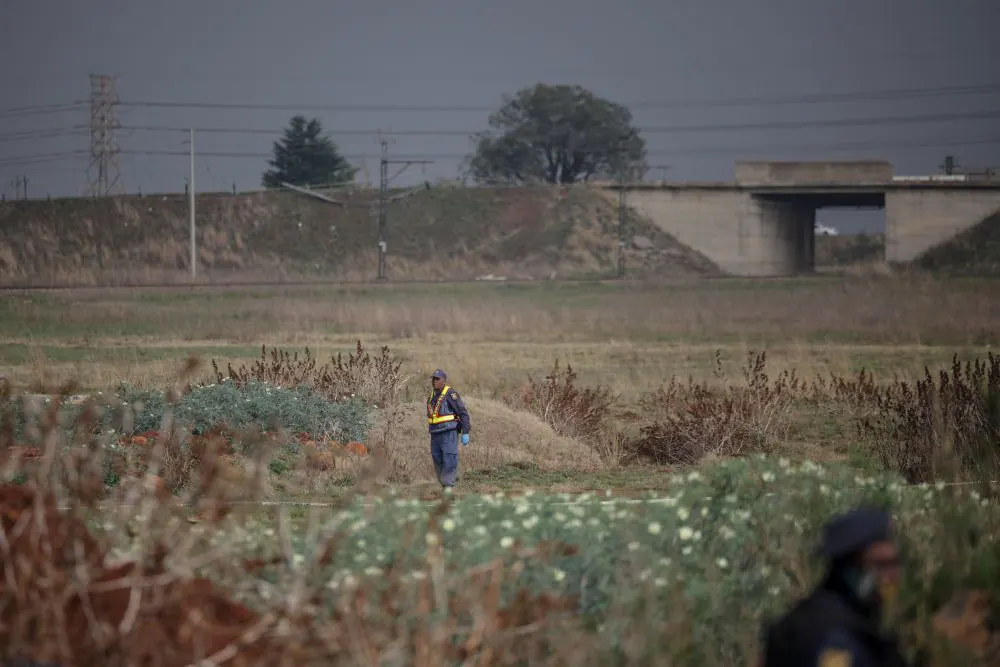
The recent murders of women in Ekurhuleni have once again raised concerns about the South African Police Service's (SAPS) response to gender-based violence and whether enough is being done to prevent such crimes. According to Cobus Steenkamp, a lecturer and researcher in policing practice at the North West University (NWU), the government's reaction to public outcry is often reactive rather than proactive in addressing the root causes of gender-based violence.
Steenkamp believes that the initial handling of the Ekurhuleni woman murders by the police exposed shortcomings in coordination, communication, and leadership. This is particularly concerning given the current challenges facing the SAPS, including allegations of crime, political interference, and corruption within the criminal justice system. The SAPS is also facing criticism for its handling of the murder investigations, including the slow response to alert the community to potential safety risks and the delayed appointment of a provincial investigation task team.
The murders in Ekurhuleni have highlighted the need for a more effective and coordinated response to gender-based violence. According to Steenkamp, the police's internal coordination mechanisms appear to be fragmented, and there was a lack of a unified communication strategy in the early stages of the investigation. The police's policy is clear that only one communication officer should provide information to the media, but in this case, sensitive details were released to the public, which Steenkamp believes was premature.
The police's response to the murders has also been criticized for placing the onus on women to ensure their own safety rather than increasing visible policing and securing the area. Steenkamp argues that a more effective approach would have been to proactively engage with the community and provide support to victims of gender-based violence. The murders of two specific women, Elizabeth "Tsontso" Moselakgomo and Itumeleng Kekana, have been highlighted as examples of the police's failure to respond effectively to missing persons reports.
The SAPS has offered rewards of R400,000 and R500,000 for information leading to the capture of the suspects, but Steenkamp believes that this is an indication of the police's lack of capacity and intelligence. He also notes that nearly 50% of all contact crimes are not reported to the police, which suggests a culture of mistrust in the police's ability to investigate and prosecute crimes. The recent revelations before the Madlanga Commission of Inquiry into crime, political interference, and corruption in the criminal justice system have further eroded public trust in the police.
The arrest of Lieutenant General Shadrack Sibiya, the suspended deputy national police commissioner, on charges of rape, human trafficking, and sexual grooming of a minor has been seen as a positive step towards addressing crime within the police. However, Steenkamp and Ian Cameron, DA MP and chair of the parliamentary portfolio committee on police, have emphasized the need for the police to evaluate their leadership positions and take decisive action to restore public trust.
The Ekurhuleni murders have highlighted the need for a more effective and coordinated response to gender-based violence in South Africa. According to Ian Cameron, the police's response to the murders has been positive, but more needs to be done to address the root causes of gender-based violence and to restore public trust in the police. The statistics show that approximately nine women are murdered every day in South Africa, making it essential to address this issue as a priority.
Key points
- The SAPS's response to the Ekurhuleni murders has exposed shortcomings in coordination, communication, and leadership.
- The police's handling of the investigation has been criticized for placing the onus on women to ensure their own safety rather than increasing visible policing and securing the area.
- The recent revelations before the Madlanga Commission of Inquiry have further eroded public trust in the police.