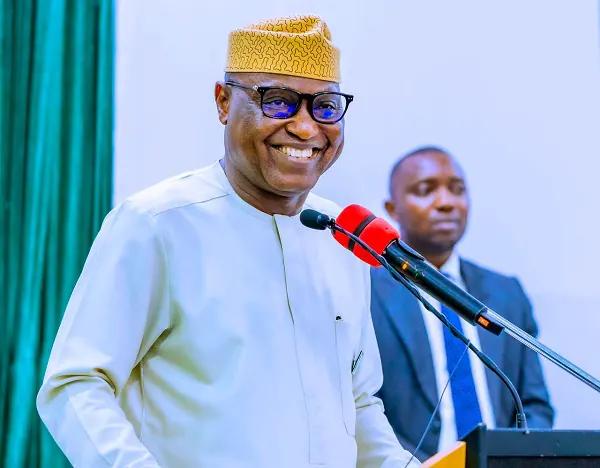
Ekiti State Governor, Biodun Oyebanji, has presented a proposed budget of N490.74bn for the 2027 fiscal year to the state House of Assembly. The budget, tagged "Budget of Sustained Progress and Prosperity," allocates N275.68bn to recurrent expenditure and N215.05bn to capital expenditure. Oyebanji emphasized that the economic sector will receive N147.98bn, accounting for 69 per cent of the capital budget, with significant investments planned for roads, agriculture, water and sanitation, and other infrastructure.
A major focus of the 2027 budget is the development of roads across the state. Several key road projects have been listed, including the 30.2-kilometre Oke-Ayedun-Ipao-Oke-Ako-Irele road, the 17.4-kilometre Ita-Ido-Ido-Ile-Okemesi Junction road, and the 15.3-kilometre Awo-Ara-Ijero road. Additionally, the budget includes provisions for the Emure-Eporo/Ondo road, Ikogosi-Ipole-Iloro-Efon Alaaye road, Igede-Awo-Eyio-Esure-Ifaki road, Ire-Afao-Ado road, and Awo-Iropora-Osi-Ido road, as well as the Iworoko-Are-Afao-Igbemo-Iluomoba road.
The governor also highlighted plans to continue rehabilitating township roads in Ado-Ekiti and constructing Phase II of the Ado-Ekiti ring road. Investments in water and sanitation infrastructure are also a priority, alongside agricultural development. The budget will support land clearing, tractorisation, livestock development, farm settlements, farm roads, and programmes targeted at the informal sector.
The health sector is expected to receive significant attention in the 2027 budget. Plans include renovating health facilities across the 16 local government areas and completing the new general hospitals at Ikogosi, Awo, and Ipao. The government also aims to complete the multipurpose building at the Ekiti State University Teaching Hospital. Furthermore, the budget will cater to the education sector, with investments in rehabilitating and developing schools and tertiary institutions.
In addition to infrastructure and social services, the governor emphasized the importance of social investment programmes. These programmes will support people with special needs, special schools, and skills acquisition programmes for women, youths, and persons with disabilities. Security remains a priority, with further investment in the Safe City project and logistics support for security agencies.
On the revenue side, the governor projected N139.85bn from federal allocation, N89.13bn from Value Added Tax, N59.71bn from independent revenue, N158.68bn from external grants, and N10bn from loans, with N33.37bn expected as the opening balance. He noted that the state’s Internally Generated Revenue rose from about N13bn in 2022 to more than N55bn in 2025.
Governor Oyebanji urged lawmakers to consider the estimates expeditiously, emphasizing that the proposed budget is designed to consolidate his administration’s achievements and further improve residents’ living conditions. He also highlighted the state’s progress on several projects in 2026, including the Tinubu Flyover at Ajilosun-Okeyinmi, road projects, healthcare infrastructure, agricultural initiatives, and security interventions.
Key points
- The 2027 budget prioritizes infrastructure development, with a focus on road construction and rehabilitation.
- The budget allocates N147.98bn to the economic sector, accounting for 69 per cent of the capital budget.
- The state’s Internally Generated Revenue has increased significantly, from N13bn in 2022 to N55bn in 2025.