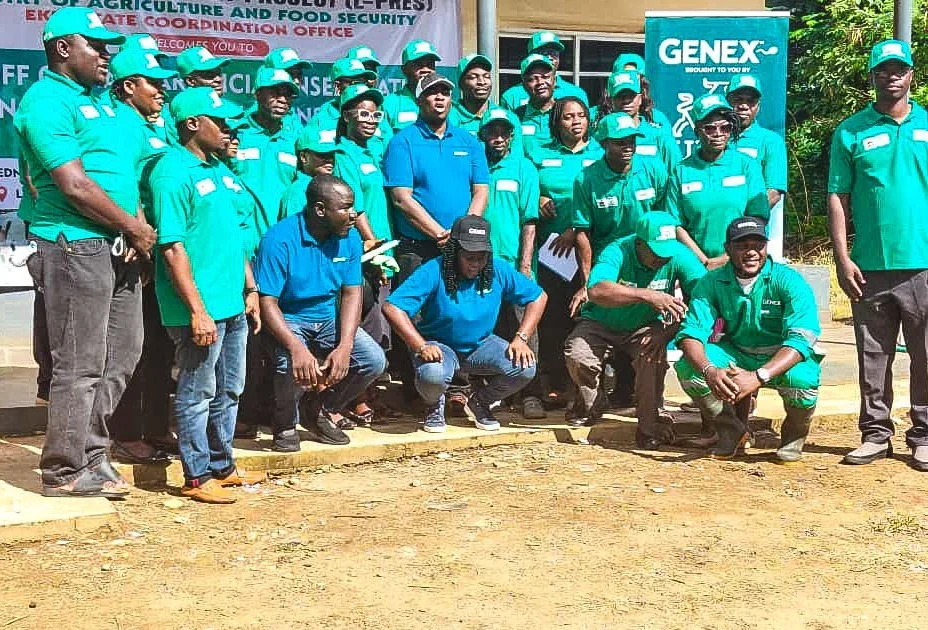
The Ekiti State Government has initiated a program to train 30 officers in artificial insemination, a modern method aimed at improving livestock production. The training, which is part of the state's Livestock Productivity and Resilience Support Project, seeks to enhance the genetic quality of local breeds. Commissioner for Agriculture and Food Security, Ebenezer Boluwade, emphasized the government's commitment to supporting livestock producers and agribusiness entrepreneurs through strategic investments.
The artificial insemination program targets 850 cows and 150 goats, with the goal of achieving genetic improvement and multiplication of livestock for better production. Boluwade highlighted that the program is designed to develop experts in artificial insemination operations who can train others, ensuring sustainability and transmission of skills in the technology. The training is expected to have a positive impact on improving and upgrading local breeds of ruminant livestock.
The Ekiti State government has identified poor genetic quality and limited access to improved breeding services as major challenges facing livestock productivity among beneficiary farmers. To address this gap, the state supports the L-PRES key results indicator on artificial insemination, which includes increased yields in milk output, live weight gain, and carcass yield. This initiative aims to improve incomes and enhance the resilience of beneficiary households.
Boluwade explained that the product of artificial insemination is improved hybrid vigor with better yield and performance through cross-breeding of local breeds with exotic breeds with good pedigree. He noted that artificial insemination eliminates the spread of sexually transmitted diseases among flocks and allows for the storage of reproductive materials and semen of good stock for a long period.
The Lead Consultant, Genex Urus Company, Olayiwola Adekunle, emphasized the importance of training local citizens in artificial insemination to ensure sustainability. Genex will support the 30 trained and qualified artificial inseminators for the next three years as part of the sustainability plan for the L-PRES project in the state. The goal is to achieve improved livelihoods and increased animal production in Ekiti State.
The Ekiti L-PRES Animal Husbandry Officer, Olumuyiwa Adelodun, stated that the mass artificial insemination and training aim to improve breed quality and multiply livestock. Adelodun noted that local breed production has been declining and that artificial insemination is necessary to enhance meat production and improve livestock quality.
The Ekiti State government remains committed to supporting livestock producers and agribusiness entrepreneurs through strategic investments in infrastructure, capacity building, market development, access to finance, and institutional strengthening. The artificial insemination program is expected to drive economic growth and improve livelihoods by enhancing the genetic quality of local breeds.
Key points
- The Ekiti State government has trained 30 officers in artificial insemination to improve livestock production and achieve genetic improvement in local breeds.
- The program targets 850 cows and 150 goats, with the goal of enhancing milk output, live weight gain, and carcass yield.
- The initiative aims to improve incomes and enhance the resilience of beneficiary households through increased yields and better livelihoods.