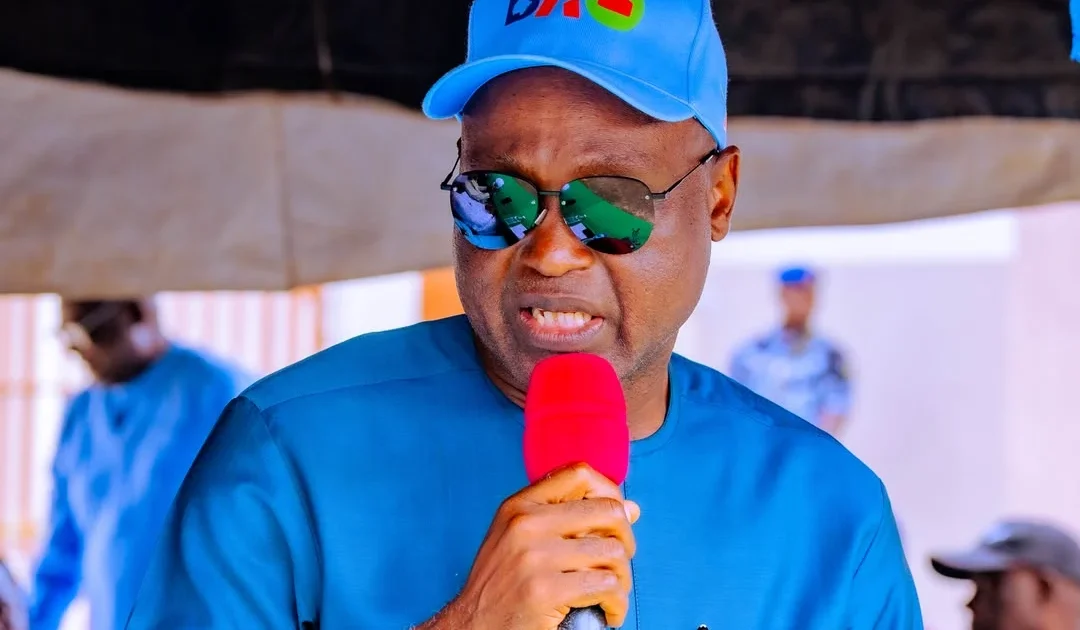
The Ekiti State government has announced plans to focus on strategic interventions to boost the state economy and enhance citizen welfare in its second term. The Planning Committee Chairman and Chief of Staff to the Governor, Oyeniyi Adebayo, made this announcement during a press conference in Ado-Ekiti to unveil activities for the October 16 inauguration of Governor Biodun Oyebanji's second term.
Adebayo noted that the administration recorded landmark achievements in its first term and would consolidate existing programmes while introducing new growth drivers. The theme of the second term, ‘The Good Work Continues’, reflects the administration's intention to consolidate existing programmes while introducing further interventions aimed at strengthening the state’s economy and improving the welfare of citizens.
The second-term administration will focus on interventions that add value to the economy, improve productivity, and respond to the needs and aspirations of the people. Recent consultative tours across the state’s three senatorial districts identified critical needs in healthcare, power, road networks, water supply, agriculture, human capital development, and economic empowerment.
A central target of the second term is the delivery of up to 1,500 kilometres of rural roads in partnership with development agencies. This move aims to improve connectivity and access to rural areas, thereby enhancing economic activities and improving the quality of life for residents.
In the first term, the administration completed over 500 kilometres of inter-city and rural roads, with several others progressing toward completion. Additionally, public power supply was extended to communities in Aiyekire, Ekiti East Local Government Area, and the Ikogosi tourism corridor after years of blackout.
The administration also made significant investments in health and education infrastructure. Over 110 primary healthcare centres and all general hospitals in the state were renovated and equipped with modern facilities. Comprehensive renovations were executed across 203 secondary schools, including three special schools, and 950 primary schools statewide.
Furthermore, the government established nine ICT laboratories in selected secondary schools and technical colleges, alongside new primary schools built under the SUBEB Model School Project. The government also supported education by expending N2.158bn on WAEC examination fees for 69,000 students over four years and distributing free JAMB forms to 12,400 candidates.
Key points
- The Ekiti State government plans to construct 1,500km of rural roads in its second term.
- The second-term administration will focus on interventions that add value to the economy, improve productivity, and respond to the needs and aspirations of the people.
- The administration made significant investments in health and education infrastructure in its first term.