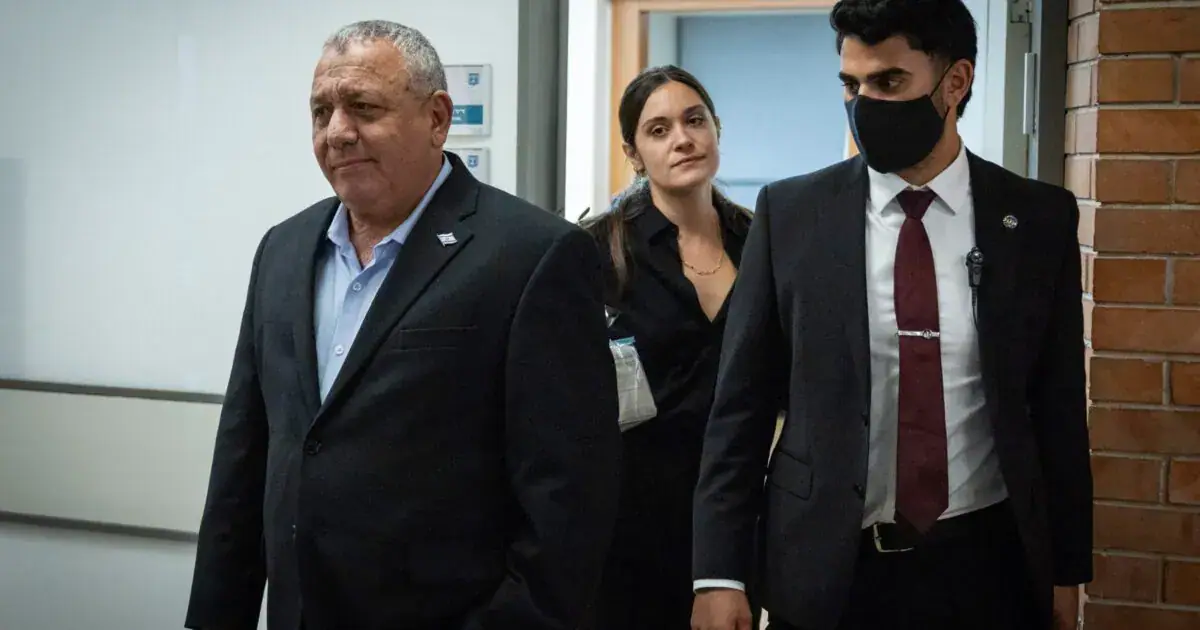
Israeli politician Gadi Eisenkot has outlined three possible paths to forming a government, citing urgency due to Prime Minister Benjamin Netanyahu's rhetoric targeting Arab parties. Eisenkot, who leads the Yashar party, described the need for swift action to protect the Arab Israeli population and prevent violence. He presented the options in a post on X, emphasizing the importance of addressing the current situation. President Isaac Herzog gave Eisenkot the mandate to form a government within 28 days, after 67 members of the Knesset expressed support.
One of Eisenkot's options is forming a government with the support of ultra-Orthodox, or Haredi, parties. This move would require compromise on military service, a central campaign promise of the anti-Netanyahu bloc. Eisenkot stressed that negotiations with the Haredi parties aimed to strengthen the IDF and address security needs while preserving the status of those who study Torah. His party's "Service for All" framework would codify non-military service as an option for some sectors. United Torah Judaism, one of the two ultra-Orthodox parties, has refrained from recommending Netanyahu to the president.
Avigdor Liberman, leader of the Yisrael Beiteinu party, said forming a government with Haredi party support was the most likely option. He emphasized the need to prioritize ending Netanyahu's rule, even if it means sacrificing pledges not to cooperate with the ultra-Orthodox. Liberman expressed confidence that a government supported by both Haredi parties could be formed. However, this option would require significant concessions on the part of the anti-Netanyahu bloc.
Eisenkot's second option is a unity government with Likud, Netanyahu's party. Negotiating teams from the two parties met earlier in the week, but talks have foundered on Netanyahu's role in a unity government. Netanyahu reportedly insists on serving as prime minister in the first part of a rotation agreement. Liberman ruled out sitting in a government with Netanyahu under any circumstances.
The third option outlined by Eisenkot is the formation of a "national emergency government," which appears to refer to a minority government relying on the votes of Arab-led parties. However, this proposal faces significant opposition within Eisenkot's own bloc, potentially jeopardizing the initiative. Liberman and Naftali Bennett have expressed reservations about this option.
If Eisenkot fails to form a government by December 6, he can request a 14-day extension from President Herzog. The current situation is seen as critical, with Israeli society and democracy approaching a point of no return. Eisenkot emphasized the need for swift action to prevent violence and protect the Arab Israeli population.
The development has significant implications for Israeli politics, with the potential to remove Netanyahu from his role as prime minister. The "change" bloc, led by Eisenkot, aims to bring about fundamental changes to the state's relationship with the ultra-Orthodox community and address issues such as military service.
Key points
- Gadi Eisenkot outlines three paths to forming a government, including a minority government with Arab party support.
- Eisenkot cites urgency due to Prime Minister Benjamin Netanyahu's rhetoric targeting Arab parties.
- The options presented by Eisenkot require significant concessions and compromise from the parties involved.