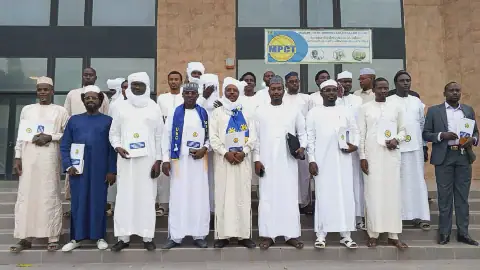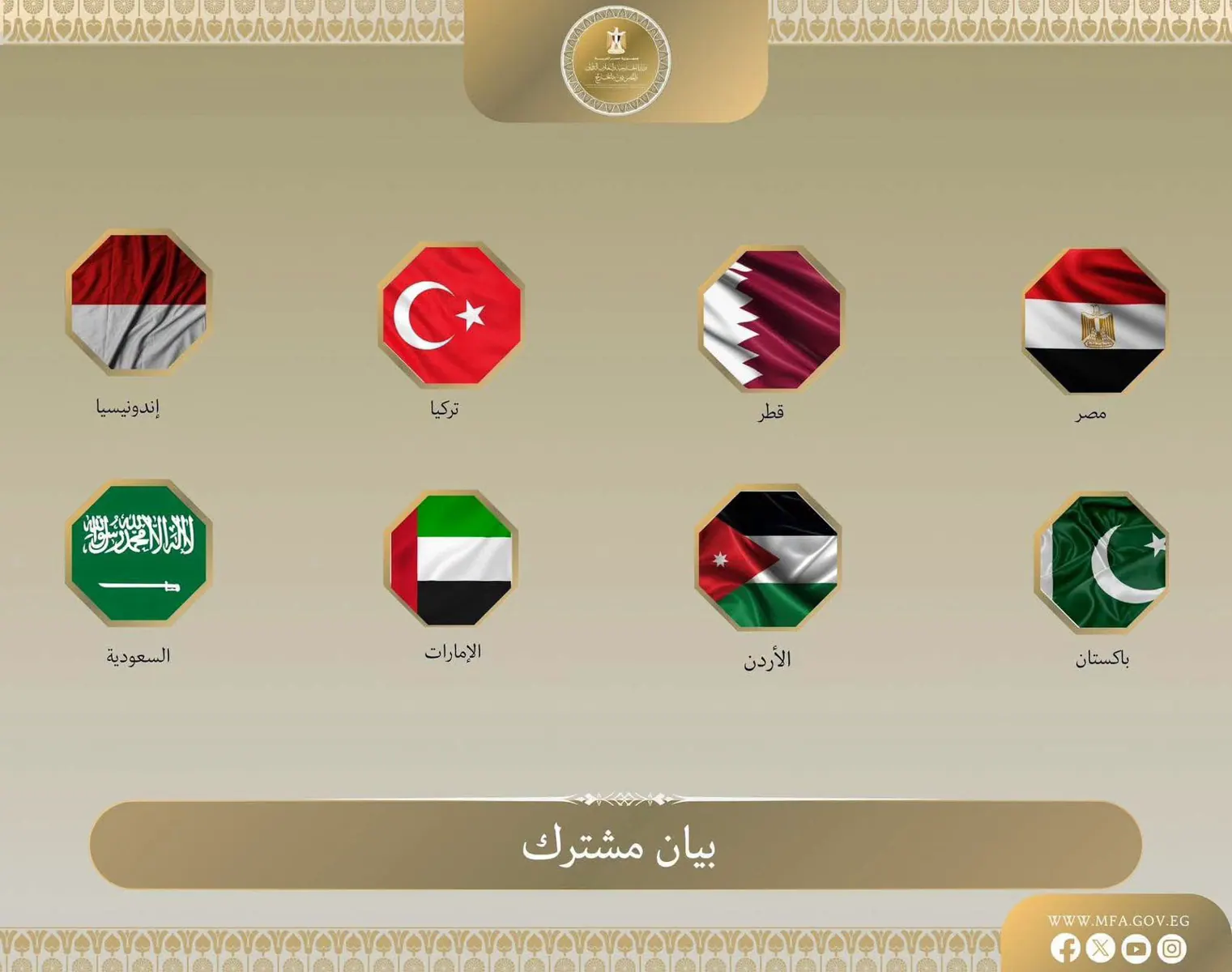
The foreign ministers of eight Muslim countries, including Egypt, Qatar, Jordan, the United Arab Emirates, Indonesia, Pakistan, Türkiye, and Saudi Arabia, have called on Israel to fulfil its obligations under the first phase of a comprehensive Gaza plan. The plan includes allowing humanitarian and early-recovery supplies to enter safely and without obstruction and maintaining the ceasefire. The ministers met in New York on September 21, 2026, on the sidelines of the 81st session of the United Nations General Assembly.
The meeting focused on ensuring the full implementation of the plan, facilitating humanitarian access and early recovery, and preventing violations that could undermine the ceasefire. Egypt's Foreign Ministry stated that the ministers coordinated their positions on implementing the Gaza plan. The joint statement issued by the ministers emphasized that the roadmap for the second phase should be implemented as an integrated package. This package includes placing weapons under agreed control, a full Israeli withdrawal from Gaza, and deploying an international stabilization force.
The ministers also stressed the importance of having the National Committee for the Administration of Gaza assume responsibility across the territory and launching early recovery and reconstruction efforts. These elements are consistent with previously announced provisions of the roadmap, which link weapons arrangements with an Israeli withdrawal, the deployment of an international force, the transfer of administrative authority, and reconstruction. The ministers called on all parties to fulfil their respective obligations in good faith and without delay.
The second phase of the plan was framed as an integrated set of security, governance, withdrawal, and reconstruction measures rather than a series of separate steps. The ministers reiterated their rejection of any forced displacement of Palestinians or attempts to alter the geographical or demographic character of the occupied Palestinian territory. They also condemned settlement expansion, land confiscation, home demolitions, settler violence, and measures aimed at entrenching Israeli control or annexation.
The ministers expressed concern over steps that undermine the historic and legal status quo at Muslim and Christian holy sites in Jerusalem. This group of countries has issued several recent statements opposing settlement expansion and changes to the status of the occupied Palestinian territory and Jerusalem. The statement welcomed recent British measures targeting Israeli settlement activity, including a ban on imports from settlements and restrictions on related services.
The eight governments had previously issued a joint statement welcoming Britain's decision and urging similar measures by other countries. The ministers emphasized that Gaza should remain an integral part of Palestinian territory and that implementation of the plan should contribute to reunifying Gaza with the West Bank, including East Jerusalem. This reunification would establish a path towards a sovereign and viable Palestinian state with East Jerusalem as its capital under a two-state framework.
The ministers praised the role of US President Donald Trump's administration and called for sustained American involvement to ensure that all parties, including Israel, meet their commitments and address obstacles to the roadmap. The eight countries said they were prepared to continue working with the United States, the Board of Peace, the Palestinian Authority, and other parties to advance implementation of the plan, ease Palestinian humanitarian suffering, and support a political process towards Palestinian self-determination and statehood.
Key points
- The eight Muslim countries called on Israel to fulfil its obligations under the first phase of a comprehensive Gaza plan.
- The ministers emphasized the importance of implementing the second phase of the plan as an integrated package.
- The countries praised the role of US President Donald Trump's administration and called for sustained American involvement.