Ain Shams University has recently discussed a master's thesis that explores the relationship between an individual's environment, psychological state, and ability to sustain recovery from addiction. The study, titled "Environmental and Psychological Variables and Their Relationship to Self-Efficacy among Those Recovered from Psychoactive Substances," was conducted by researcher Ahmed Abu Al-Ela Ahmed Mohamed. This research is part of the Egyptian state's ongoing efforts to combat addiction, with an annual allocation of approximately 13 billion Egyptian pounds for treatment, rehabilitation, and prevention programs.
The study delves into a crucial question in the field of addiction treatment: why some individuals successfully recover without relapse, while others return to substance use despite similar environmental and social circumstances. The research concludes that "self-efficacy" – an individual's belief in their ability to resist substance use and maintain recovery – is the most influential psychological factor in this process. Moreover, self-efficacy is closely linked to the individual's family and social environment and is inversely affected by irrational beliefs associated with substance use.
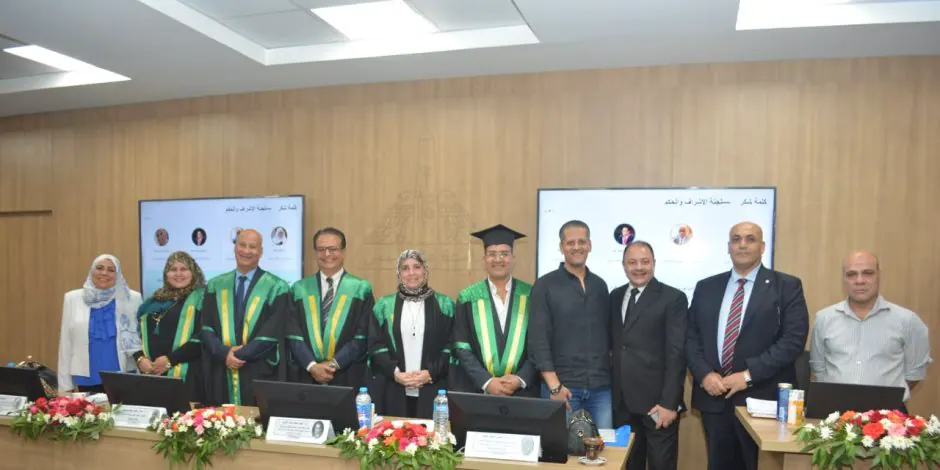
A committee of experts supervised and evaluated the thesis, comprising Professor Amal Hussein Mohamed, Assistant Professor of Clinical Psychology at Ain Shams University; Professor Ehab Mohamed Abdel Aziz Eid, Professor of Public Health and Behavioral Medicine; Professor Jamal Mohamed Farois, Consultant Psychiatrist and Addiction Treatment Specialist; and Professor Nahla Salah Ali, Assistant Professor of Educational Psychology. The committee praised the researcher and the thesis topic, highlighting its relevance to the Egyptian state's efforts to combat addiction.
The thesis discussion took place at Ain Shams University's Network and Technology Center, with notable attendance from professors and experts in psychology, mental health, and related fields. Committee members commended the work from their respective areas of expertise, emphasizing its scientific and practical value. Professor Amal Hussein Mohamed, the primary supervisor, described the thesis as a "hero's thesis" due to its focus on individuals who have overcome addiction to regain their lives.
Upon conclusion of the discussion, the evaluation committee decided to award researcher Ahmed Abu Al-Ela Ahmed Mohamed a master's degree in Environmental Sciences, specializing in Clinical Psychology. The committee also recommended exchanging the thesis with universities and research centers, acknowledging its scientific significance and potential to inform treatment and prevention programs.
The study's findings emphasize the importance of self-efficacy in addiction recovery and highlight the need for comprehensive support systems that address environmental and psychological factors. By understanding these factors, researchers and practitioners can develop more effective interventions to support individuals in recovery and prevent relapse.
Key points from this study include the critical role of self-efficacy in addiction recovery, the influence of family and social environments on recovery outcomes, and the need for evidence-based programs that address the complex needs of individuals recovering from addiction.
Key points
- The study emphasizes the importance of self-efficacy in addiction recovery.
- Environmental and psychological factors significantly influence recovery outcomes.
- Comprehensive support systems are necessary to address the complex needs of individuals recovering from addiction.