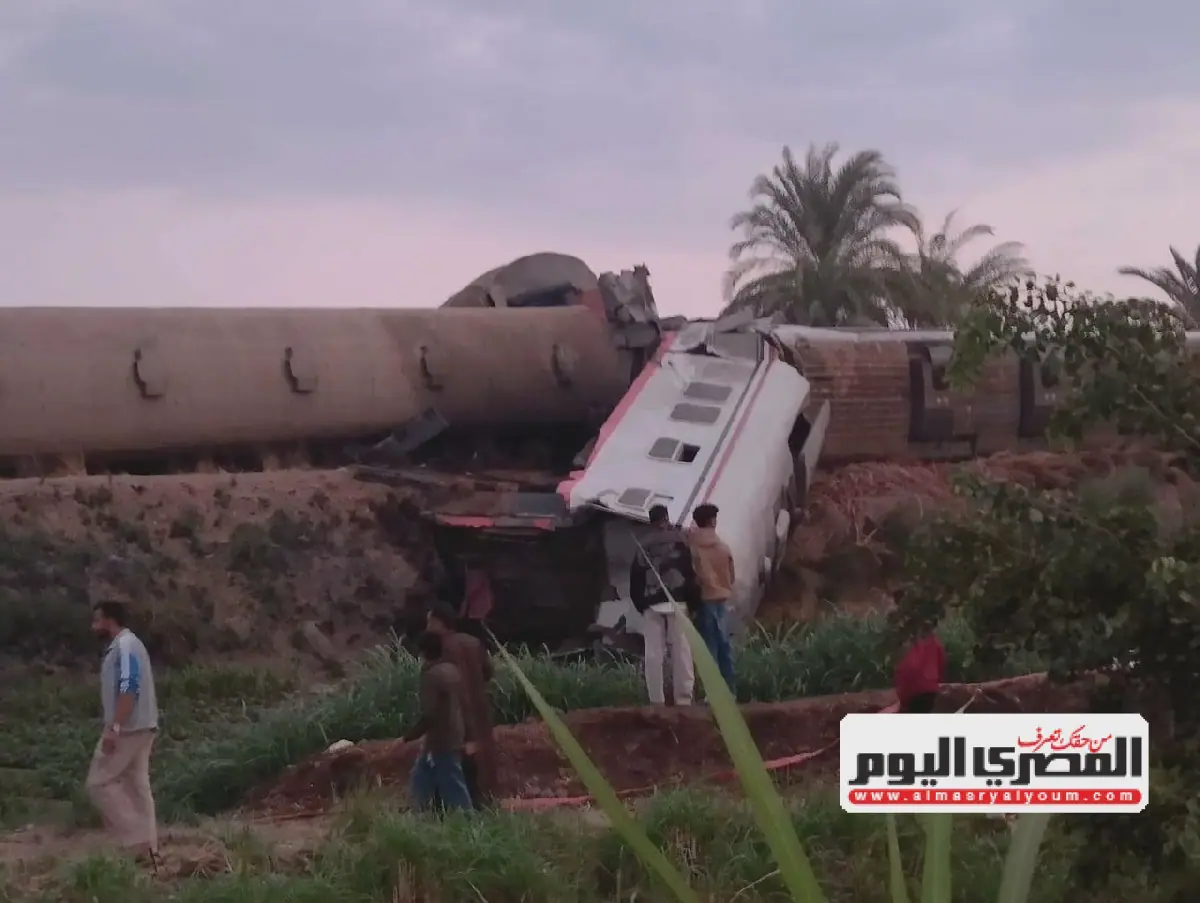
A train numbered 134, headed from Giza to Fayoum, collided with the rear of train 2010, which was traveling from Cairo to Aswan, in the Ayat region of Giza. The incident led to several carriages derailing, causing injuries and fatalities among passengers and disrupting train traffic on the Cairo-Aswan line. Egypt's National Railway Authority responded by dispatching emergency teams and cranes to the scene to manage the damaged carriages and clear the wreckage.
The Egyptian National Railway Authority reported that several injured passengers were transported to hospitals for medical care, while efforts to deal with the aftermath of the collision continued. Egyptian President Abdel Fattah el-Sisi directed state authorities to provide necessary medical care to the injured and to quickly investigate the incident and hold accountable those found responsible. The President also expressed his condolences to the families of the deceased and wished the injured a speedy recovery.
The Ministry of Health reported that 7 people were killed and 114 injured in the collision. The ministry also stated that it was providing medical care to those affected and working to transfer patients to hospitals as needed. The Egyptian government quickly responded to the incident, with Prime Minister Mostafa Madbouli instructing officials to provide support to the families of the victims.
The collision raised concerns about railway safety in Egypt, with several previous incidents occurring on the Cairo-Aswan line. An investigation into the cause of the collision was launched, with authorities working to determine the circumstances surrounding the incident. The government faced criticism for its handling of railway safety, with some lawmakers calling for the transportation minister to be held accountable.
In response to the incident, the Egyptian government announced plans to provide financial compensation to the families of the victims. The families of those killed in the incident would receive 50,000 Egyptian pounds, while those injured would receive medical care and support. The government also worked to restore train traffic on the Cairo-Aswan line, with efforts to clear the wreckage and repair damaged tracks.
The incident sparked widespread concern about railway safety in Egypt, with many calling for improved measures to prevent such incidents in the future. The government faced pressure to take action to address concerns about railway safety and to hold those responsible for the incident accountable. An investigation by the public prosecutor's office was launched to determine the cause of the collision.
The Egyptian railway authority reported that 35 injured passengers from the collision were discharged from hospital, while efforts to support those affected continued. The authority also announced that it was working to restore normal train operations on the Cairo-Aswan line, with efforts to clear the wreckage and repair damaged tracks.
Key points
- 7 people were killed and 114 injured in the collision.
Reporting sources
- حادث قطاري العياط لحظة بلحظة.. التفاصيل الكاملة وآخر المستجدات · Al-Masry Al-Youm