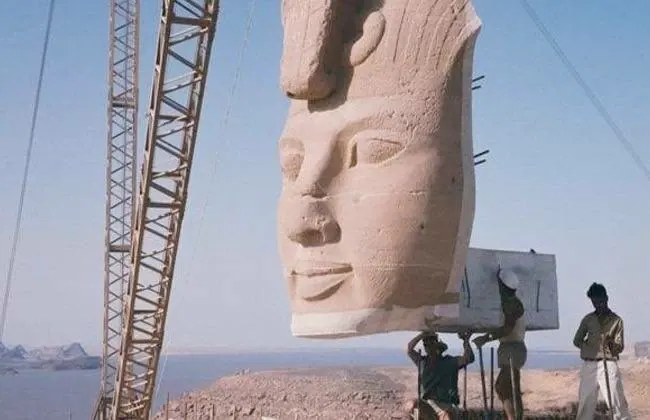
The Abu Simbel temple, a historic site located in the mountains of southern Aswan, Egypt, was successfully relocated and reassembled in a new location 22 years ago today. The temple, built by Pharaoh Ramses II in 1250 BC, was carved into the mountain and features four large statues of the king, each standing 20 meters tall. The site was in danger of being submerged by the waters of Lake Nasser, created by the construction of the Aswan Dam.
The temple complex consists of two main temples, with the larger one dedicated to Ramses II and the smaller one to his wife, Nefertari. The temples were built over a period of 20 years, from 1244 to 1224 BC, to commemorate the king's victory in the Battle of Kadesh and to intimidate the neighboring Nubian tribes. Over time, the site was forgotten, and it wasn't until 1813 that Swiss explorer Jean-Louis Burckhardt rediscovered the temple.
The Egyptian government, in collaboration with UNESCO, launched a massive rescue effort in 1965 to save the temple from the rising waters of Lake Nasser. The project involved cutting the temple into large stone blocks, lifting them, and reassembling the site in a new location with a higher elevation. The operation, which began in 1964, took four years to complete and cost $40 million.
The relocation of the Abu Simbel temple is considered one of the greatest archaeological engineering feats of the 20th century. The site was carefully dismantled, with over 1,000 blocks of stone, weighing up to 20 tons each, being transported to the new location. The temple was reassembled, and the site was restored to its original glory.
The rescue effort was a major international undertaking, with teams from around the world contributing to the project. The operation was widely publicized, and it helped raise awareness about the importance of preserving cultural heritage sites. The successful relocation of the Abu Simbel temple has ensured its preservation for future generations.
Today, the Abu Simbel temple is one of Egypt's most popular tourist attractions, attracting millions of visitors each year. The site has been beautifully restored, and its relocation is a testament to human ingenuity and determination. The temple's preservation is a reminder of the importance of protecting our cultural heritage.
The anniversary of the temple's relocation is a significant event in Egypt's cultural calendar. It highlights the country's rich history and its commitment to preserving its ancient heritage. The Abu Simbel temple is an iconic symbol of Egypt's pharaonic past, and its rescue is a remarkable story of international cooperation and determination.
Key points
- The Abu Simbel temple was relocated to a new site to avoid being submerged by the waters of Lake Nasser.
- The relocation effort, which began in 1964, took four years to complete and cost $40 million.
- The temple's rescue is considered one of the greatest archaeological engineering feats of the 20th century.