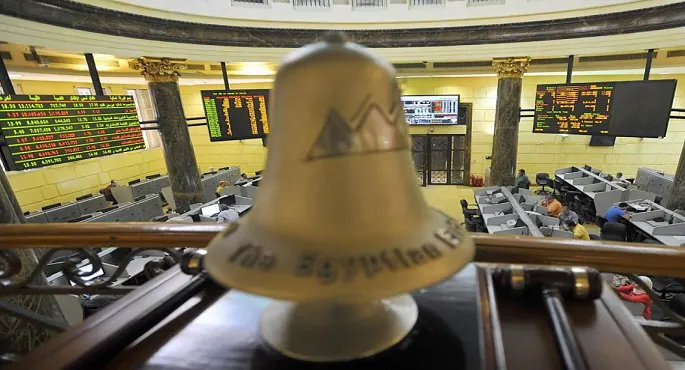
The Egyptian stock market witnessed a decline in its indices at the close of Tuesday's trading, influenced by selling activities from Arab, foreign, and local institutional investors and funds. Conversely, individual Egyptian, Arab, and foreign investors tended to lean towards buying. This market trend led to a loss of approximately 15 billion Egyptian pounds in the market capitalization of listed companies, bringing it down to 4.076 trillion Egyptian pounds.
The overall transactions in the market reached about 344.2 billion Egyptian pounds, including transactions in bonds, treasury bills, and ownership transfer deals. Specifically, the stock market transactions amounted to around 6.9 billion Egyptian pounds. These figures indicate a significant level of activity in the Egyptian stock market, despite the overall decline in indices.
The main stock index, "EGX 30," decreased by 0.33%, reaching a level of 52,297.12 points. Similarly, the small and medium stock index, "EGX 70," dropped by 0.51%, settling at 18,421.66 points. The broader "EGX 100" index also experienced a decline of 0.34%, reaching 24,619.32 points. These declines reflect a negative trend in the Egyptian stock market during Tuesday's trading session.
The downward trend in the Egyptian stock market can be attributed to the selling pressure from institutional investors and funds. This selling activity outweighed the buying interest from individual investors, leading to the decline in market indices. The market capitalization loss of 15 billion Egyptian pounds underscores the significant impact of this trend on the overall market performance.
Despite the decline, certain sectors and stocks may have presented opportunities for investors. The fact that individual investors, particularly Egyptians, Arabs, and foreigners, were net buyers suggests that they may have seen value in specific stocks or sectors. This divergence in investor behavior highlights the complexity of the market dynamics and the varied perspectives among different types of investors.
The Egyptian stock market's performance is closely watched by investors and analysts, as it reflects the country's economic health and investor sentiment. The market's volatility, as seen on Tuesday, can be influenced by a range of factors, including economic indicators, political developments, and global market trends. Understanding these factors is crucial for making informed investment decisions.
In conclusion, the Egyptian stock market experienced a decline in its indices at the close of Tuesday's trading, driven by selling activities from institutional investors and funds. While this trend led to a loss in market capitalization, it also underscores the dynamic nature of the market and the varied behavior among different types of investors.
Key points
- The Egyptian stock market indices declined at the close of Tuesday trading, driven by selling operations from Arab, foreign, and local investment institutions and funds.
- The market capitalization of listed companies lost approximately 15 billion Egyptian pounds, bringing it down to 4.076 trillion Egyptian pounds.
- The main stock index, "EGX 30," decreased by 0.33%, reaching a level of 52,297.12 points.