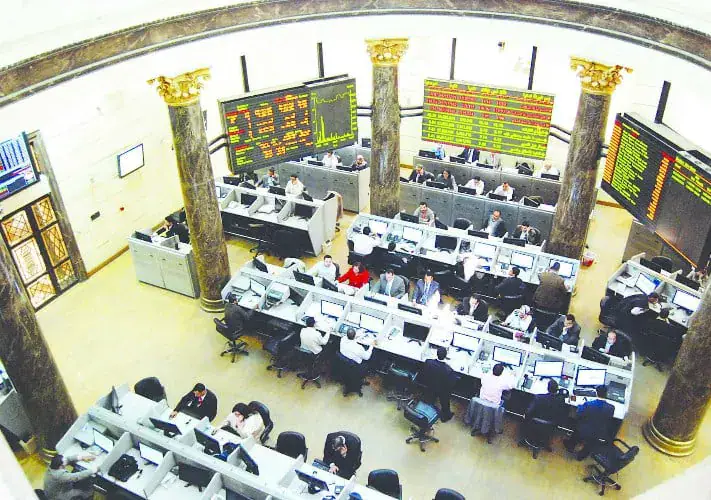
The Egyptian stock market experienced a decline in its indices during the mid-session of Tuesday's trading. The EGX30 index fell by 1.14%, reaching 51603 points. Additionally, the EGX70 EWI index decreased by 2.73% to 17536 points, and the EGX100 EWI index dropped by 2.35% to 23458 points. This decline is part of a larger trend in the market.
According to the trading data, the total value of transactions on stocks amounted to approximately 5.7 billion Egyptian pounds. This was achieved through the trading of 1.4 billion securities, executed in 159.07 thousand transactions. The market capitalization stood at 4.078 trillion pounds. The price of 17 stocks rose, while 189 stocks declined, and 14 stocks remained stable.
The decline in the stock market is occurring amidst various economic developments in Egypt. The government has been working on enhancing the country's energy infrastructure. Recently, it secured 700 million euros to boost the power transmission network and integrate renewable energy sources. This move aims to improve the efficiency and sustainability of Egypt's energy sector.
The Egyptian government has also been focusing on attracting investments. A new strategy was recently announced, targeting 78 billion dollars in direct investments by 2030. This plan is part of the country's efforts to stimulate economic growth and create new opportunities for investors. The strategy's success will be crucial in determining the country's economic trajectory.
Other recent developments in Egypt include changes in the prices of gold and adjustments in the minimum wage for private sector workers. The price of gold, particularly the 21-carat type, has been decreasing, losing 65 pounds recently. Starting from January 2027, the minimum wage for private sector employees will be raised to 8500 pounds. These changes reflect the government's attempts to manage economic conditions and support citizens.
In the real estate sector, Zaharaya Al-Maadi has committed to refunding 233.1 million pounds to Madina Egypt by March 2027. This development indicates the ongoing efforts of companies to fulfill their financial obligations and maintain stability in the market. The Egyptian government has been monitoring the situation closely, aiming to protect the interests of all parties involved.
The Egyptian stock market's performance is being closely watched by investors and analysts. The recent decline in indices may be attributed to various factors, including the current economic climate and global market trends. As the market continues to fluctuate, investors are advised to stay informed and make well-informed decisions.
Key points
- The Egyptian stock market indices declined mid-session on Tuesday, with the EGX30 dropping 1.14% to 51603 points.
- The government has secured 700 million euros to enhance the power transmission network and integrate renewable energy sources.
- Egypt aims to attract 78 billion dollars in direct investments by 2030 as part of its new economic strategy.