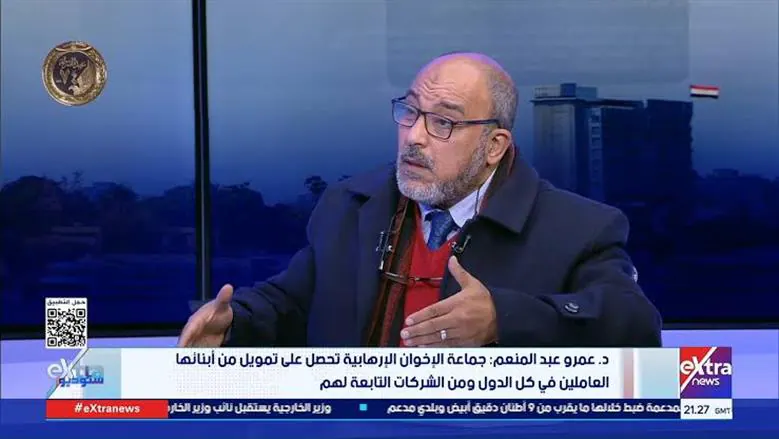
Egyptian researcher Amr Abdel Menem has warned that the Muslim Brotherhood's influence in European societies is not limited to its current political movements, but also through its ideological discourse. He stated that the group's influence can be seen through various fronts, including charitable, human rights, and media organizations. These fronts often adopt a discourse that aligns with issues raised in European societies, such as freedom of expression, women's rights, and protection of childhood.
Abdel Menem, a researcher in Islamic political movements, emphasized that the Muslim Brotherhood's presence in Europe is not only a political issue but also an ideological one. He noted that the group's activities may seem benign on the surface but can lead to extremism and terrorism. The researcher highlighted that the Brotherhood's influence can be seen in countries such as France, Britain, and Germany, where it has established various institutions and investments.
One of the primary concerns, according to Abdel Menem, is the potential for the Muslim Brotherhood to create parallel societies that can affect the identity and character of European communities. He stressed that this issue raises a challenge in distinguishing between the Islamic faith and Islamic political movements. Abdel Menem warned against conflating the two, as this can lead to generalizations about Muslims and their communities.
The researcher emphasized the need to differentiate between Muslims and political organizations. He noted that the European debate on defining threats related to Islamic political movements requires a nuanced approach that distinguishes between different groups and their activities. Abdel Menem argued that failing to make this distinction can lead to unfair generalizations about Muslims.
The European Parliament recently approved a resolution on October 8, 2026, calling for a European approach to dealing with Islamic political infiltration. The resolution also emphasized the need for stricter controls on financing and studying whether individuals and entities linked to the Muslim Brotherhood meet the necessary legal criteria for inclusion on the European Union's terrorism list.
Abdel Menem also discussed the role of charitable work and institutional fronts in promoting the Muslim Brotherhood's influence. He noted that while some organizations may have legitimate charitable goals, others may use these fronts to achieve ideological objectives. The researcher emphasized the importance of evaluating these activities based on their actual practices and goals, rather than just their stated objectives.
The researcher concluded that the differences between genuine charitable work and activities aimed at achieving ideological goals will become clearer over time. He stressed the need for a nuanced understanding of these issues to avoid generalizations and to address the complexities of Islamic political movements in European societies.
Key points
- The Muslim Brotherhood's influence in European societies is not limited to its current political movements but also through its ideological discourse.
- The group's activities may seem benign on the surface but can lead to extremism and terrorism.
- There is a need to differentiate between Muslims and political organizations to avoid generalizations and unfair treatment.