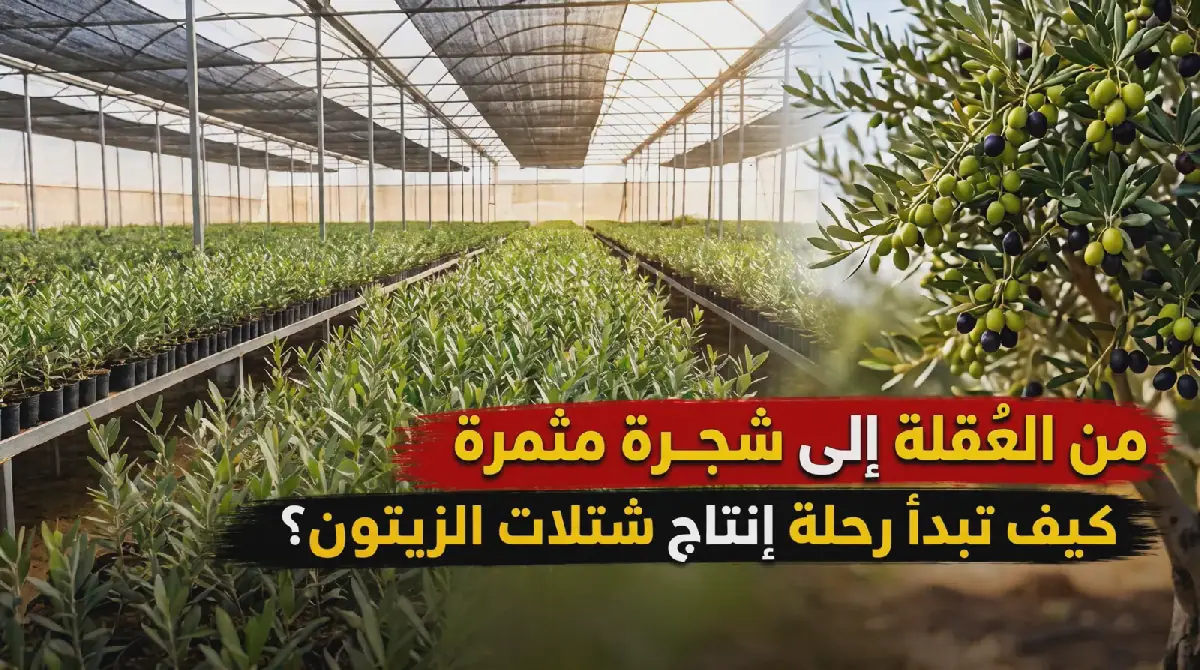
The Egyptian Desert Research Center is playing a crucial role in supporting agricultural development in the Sinai Peninsula by producing high-quality olive seedlings. The center's "Hour from Sinai" program, presented by media personality Safaa Saber, recently showcased the process of producing olive seedlings within the center's greenhouses. According to Dr. Emad, one of the center's officials, the journey of producing olive seedlings begins with selecting plant cuttings from mother trees of approved and known-source varieties.
The center's greenhouse provides optimal environmental conditions for the cuttings to grow, with controlled temperature and humidity levels. The temperature in the root area is maintained at around 23 degrees Celsius, and the necessary humidity is provided using cooling units to regulate the internal environment of the greenhouse. The cuttings remain in this environment for approximately one and a half to two months before being transferred to outdoor greenhouses for acclimation.
The acclimation process helps the seedlings adapt gradually to external environmental conditions and complete their growth stages. Dr. Emad emphasized that the center, as a scientific research institution, relies on specialized scientific techniques for seedling production, in addition to utilizing traditional methods such as the tunnel system. This allows for the application of multiple propagation and production methods.
The center is one of three serving the Sinai Peninsula, with two located in North Sinai and one in Central Sinai. These centers provide services to local communities, farmers, and beneficiaries in surrounding areas. Dr. Emad also mentioned that a new center is set to open in the Al-Hassana area, expanding agricultural and advisory services to the local population.
The center's role extends beyond producing seedlings, as it also educates farmers on production stages and methods for preparing and caring for cuttings. This enables farmers to familiarize themselves with the scientific methods used and verify the sources and quality of the seedlings. The center's efforts aim to support the state's plans to promote agricultural development in the Sinai Peninsula.
According to Dr. Emad, the center aims to produce between one and two million olive seedlings, in line with the directives of the Minister of Agriculture and Land Reclamation, Alaa Farouk, and the head of the Desert Research Center. This initiative seeks to meet the needs of farmers and beneficiaries, supporting the expansion of olive cultivation and promoting sustainable agricultural development.
The "Hour from Sinai" program continues to highlight developmental projects and efforts on the ground in Sinai, showcasing models that contribute to supporting local communities and achieving sustainable development. By investing in agricultural research and development, Egypt aims to unlock the potential of the Sinai Peninsula and improve the livelihoods of its residents.
Key points
- The Egyptian Desert Research Center produces 1-2 million olive seedlings to support agricultural development in the Sinai Peninsula.