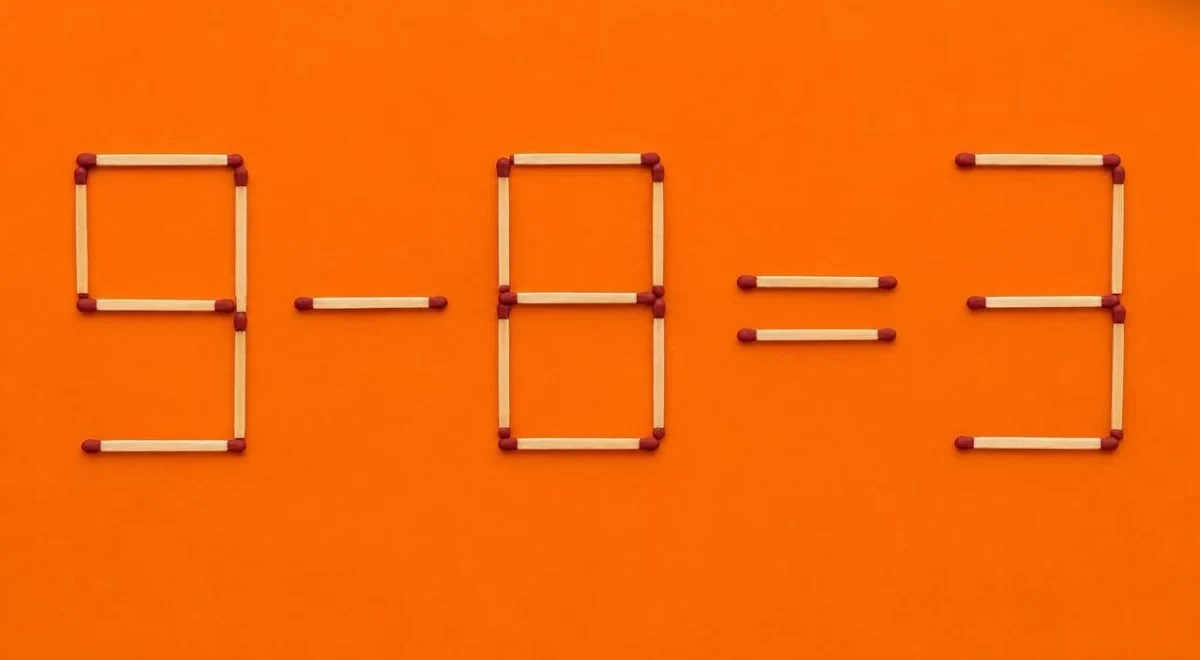
A recent viral sensation has taken the Egyptian puzzle community by storm, as enthusiasts attempt to solve a matchstick challenge within a mere 30 seconds. The brain teaser, which has been widely shared on social media platforms, requires individuals to rearrange matchsticks to form a specific pattern. According to experts, this type of puzzle helps to assess one's visual processing skills and intelligence. The challenge has been making rounds on Egyptian social media, with many citizens eager to test their cognitive abilities.
The matchstick puzzle is a classic example of an optical illusion, which tricks the brain into perceiving a certain image or pattern. These types of puzzles have been used by scientists to study how the human brain processes visual information. By solving such puzzles, individuals can improve their critical thinking skills and enhance their cognitive abilities. The 30-second time limit adds an extra layer of complexity, pushing participants to think quickly and efficiently.
To solve the puzzle, participants are required to carefully examine the image and rearrange the matchsticks to form a specific pattern. The challenge can be found online, and individuals are encouraged to share their experiences and results on social media. According to reports, those with high levels of intelligence and quick reflexes are more likely to solve the puzzle within the given time frame. However, experts emphasize that the challenge is not just about intelligence, but also about attention to detail and visual processing skills.
The matchstick challenge has sparked a heated debate among Egyptians, with many taking to social media to share their experiences and offer tips. Some have reported finding the solution within seconds, while others have struggled to solve it even after multiple attempts. The challenge has also led to the creation of various online communities, where individuals can share their progress and compete with others.
Experts believe that puzzles like the matchstick challenge can have a positive impact on cognitive development, particularly in children. By regularly engaging in such activities, individuals can improve their problem-solving skills, memory, and concentration. Moreover, these puzzles can be a fun and engaging way to develop critical thinking and analytical skills.
For those struggling to solve the puzzle, experts offer a hint: focus on the second and third numbers. By carefully examining the image and making a few strategic moves, participants can increase their chances of solving the puzzle within the 30-second time limit. The solution to the puzzle can be found online, and individuals are encouraged to share their experiences and results with others.
The matchstick challenge is just one example of the many puzzles and brain teasers that have been circulating online. As Egyptians continue to engage with these types of challenges, experts predict that there will be a significant improvement in cognitive abilities and problem-solving skills. The challenge has also sparked a renewed interest in puzzles and brain teasers, with many Egyptians seeking out new and exciting challenges to test their skills.
Key points
- The 30-second matchstick challenge tests visual processing skills and intelligence.
- Optical illusions like the matchstick puzzle help scientists study how the human brain processes visual information.
- Regularly engaging in puzzles and brain teasers can improve problem-solving skills, memory, and concentration.