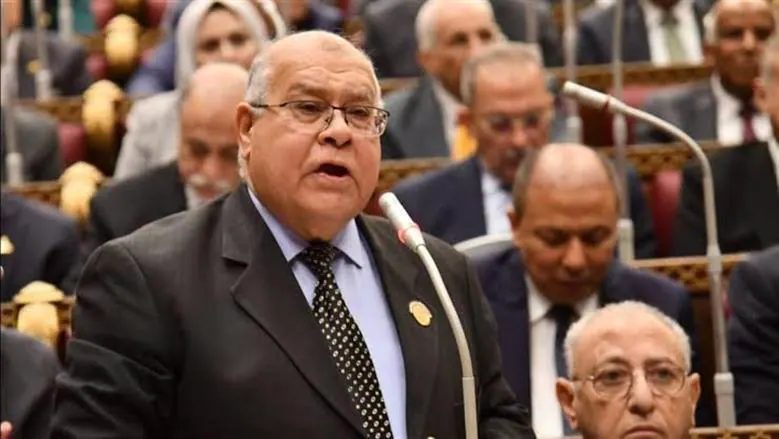
Egyptian Prime Minister, Dr. Mostafa Madbouly, recently delivered a speech at the United Nations General Assembly, highlighting Egypt's position on several crucial matters that impact the country's national security and the broader region. According to Naji Al-Shehabi, head of the Generation Party and a member of the Senate, Madbouly's speech conveyed clear Egyptian messages regarding key issues, including water security, the Palestinian cause, and regional stability.
Al-Shehabi emphasized that a significant aspect of Madbouly's speech was the emphasis on water security as a vital issue that does not tolerate compromise. He stated that Egypt's stance on the Nile River is not merely an economic concern but a matter of life that has been intertwined with the country's existence and development throughout history. Egypt's determination to protect its water security and preserve its people's resources is seen as a clear message that the country supports all nations' right to development while rejecting any actions that might harm others' rights and interests.
The issue of the Nile's waters is not negotiable, and Egypt insists on adhering to international law and reaching binding agreements that serve all parties' interests. Al-Shehabi reiterated that Egypt prioritizes cooperation and peaceful solutions but will not compromise on its water rights. This stance is rooted in the country's historical and developmental context, making it an issue of survival for the Egyptian people.
The Palestinian cause was another focal point of Madbouly's speech, as it represents a significant test of the international system's credibility and legitimacy. Al-Shehabi noted that Egypt's unwavering stance against the displacement of the Palestinian people from their land, whether in Gaza or the West Bank, including East Jerusalem, is unshakeable. He stressed that peace cannot be achieved by uprooting a nation from its land and that conflict resolution cannot replace a lasting solution.
Egypt's position on the Palestinian issue is centered on the establishment of an independent Palestinian state with sovereignty, connected geographically, based on the 1967 borders, and with East Jerusalem as its capital. This stance aligns with international legitimacy and resolutions, reflecting Egypt's view of the Palestinian cause as a matter of national and political rights rather than merely a humanitarian crisis. Egypt will continue to support efforts to stop the fighting, provide aid, rebuild Gaza, and pave the way for a genuine political settlement.
Regarding regional security, Al-Shehabi praised Madbouly's emphasis on the interconnectedness of security, where one nation's security cannot be built on the insecurity of its neighbors. The Egyptian vision, as conveyed by Madbouly, supports the strengthening of national states, their institutions, and territorial unity, while rejecting the fragmentation of countries or the creation of parallel entities. This approach is grounded in the belief that weakening national states leads to chaos and external interventions.
Finally, Al-Shehabi highlighted Madbouly's call for reforming the international system, particularly the Security Council, and addressing the double standards in applying international law. He concluded that Egypt's message at the United Nations was comprehensive, focusing on protecting national security, defending legitimate rights, supporting the Palestinian cause, respecting state sovereignty, adhering to international law, and seeking to reform the international system.
Key points
- Egypt's Prime Minister emphasizes that water security is a matter of survival and a red line that cannot be compromised.
- Egypt calls for the establishment of an independent Palestinian state with sovereignty and territorial integrity.
- Egypt advocates for reforming the international system and addressing double standards in applying international law.