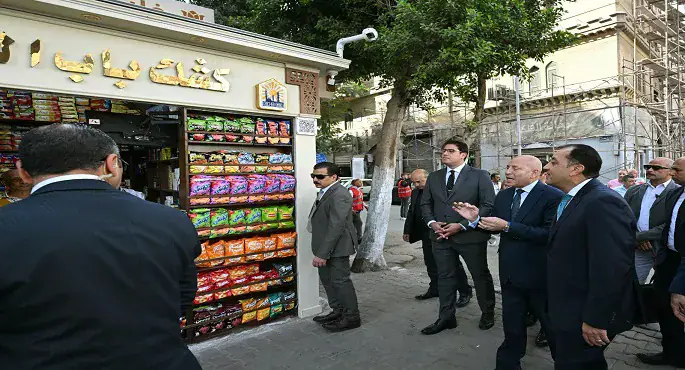
On Monday, November 2, 2026, Egyptian Prime Minister Dr. Mostafa Madbouli visited Tahrir Square to inspect the implementation of a unified kiosk system across Cairo's neighborhoods. This initiative aims to enhance the city's visual appeal and organize the existing kiosks. The Prime Minister was briefed by Cairo Governor Dr. Ibrahim Saber on the system's progress, which began in mid-September 2026.
According to Dr. Ibrahim Saber, there are currently 2,739 kiosks and 1,790 counters in Cairo. The new system seeks to standardize the design of licensed kiosks with a unified, culturally-sensitive model developed in collaboration with the National Authority for Urban Harmony. This design is intended to reflect Cairo's historical significance and architectural style. Owners of existing kiosks have been given a three-month deadline to comply with the new regulations.
A key aspect of the unified kiosk system is its electronic management through a QR code, which will be displayed on each kiosk. This code will provide essential information, such as the owner's name, license details, and any outstanding fees. Additionally, a designated advertising space will be allocated on each kiosk, featuring the Cairo Governorate's logo, the kiosk's name, and license number.
The standard kiosk design measures 2x3 meters or 3x3 meters and includes safety features such as a fire extinguisher and an electricity meter. The design also incorporates designated areas for beverage coolers, sweets, and product displays, ensuring a uniform and organized appearance. The Governor mentioned that a uniform for kiosk vendors may also be introduced.
Kiosk owners can choose to implement the new design themselves or seek assistance from Cairo's public works department, with the option to pay for the implementation in installments over two years. Failure to comply with the new regulations may result in license revocation. Dr. Saber emphasized that the new system aims to bring discipline to Cairo's streets, eliminate unsightly elements, and ensure that kiosk operators work within a lawful and culturally-sensitive framework.
The Governor stressed that kiosks are considered state property, managed through occupancy fees and licensing. Compliance with the designated size and design is a prerequisite for license renewal. The new system is designed to be adaptable, with ongoing assessments to optimize its effectiveness. The Governor assured that any future developments will involve public consultations with stakeholders to achieve the best possible outcomes.
The unified kiosk system will be implemented across all Cairo neighborhoods, including populous and urban areas. This initiative reflects the government's commitment to enhancing the city's aesthetic appeal and promoting a more organized and culturally-sensitive urban environment. KEY_POINT: The Egyptian government has introduced a unified kiosk system in Cairo to improve the city's visual appeal and regulate existing kiosks. KEY_POINT: The system features a standardized design and electronic management through QR codes. KEY_POINT: Kiosk owners have been given a three-month deadline to comply with the new regulations.