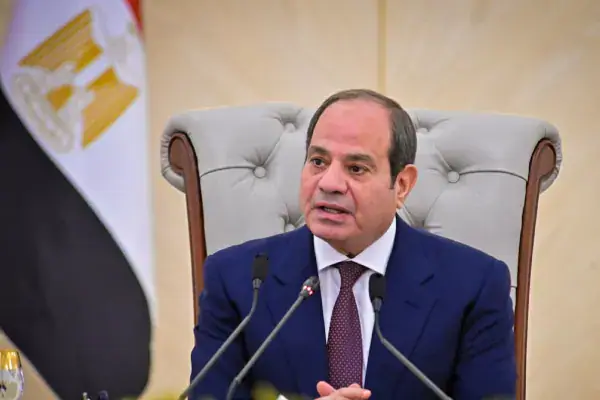
Egyptian President Abdel Fattah Sisi recently met with Prime Minister Mostafa Madbouli, Civil Aviation Minister Samah El-Hafnawy, and other officials to discuss plans to develop Egyptian airports and enhance air transport capabilities. The meeting covered the state's investments in the aviation sector, including a $400 million investment in modernizing the air traffic control system. This upgrade includes updating radar systems, satellite networks, and communication systems.
The Egyptian government has made significant investments in the aviation sector, with the civil aviation sector generating $4.8 billion in revenue during the 2025/2026 year. This substantial revenue highlights the importance of the aviation sector in supporting Egypt's foreign exchange resources. President Sisi emphasized the need to continue updating airport digital infrastructure and expanding the use of modern technological solutions to facilitate travel procedures and improve the passenger experience.
One of the key projects discussed during the meeting was the construction of a new terminal at Cairo International Airport. Terminal 4 is expected to increase the airport's capacity to 70 million passengers per year in its first phase and 110 million passengers per year by 2041. President Sisi stressed that the terminal should be built using the latest technologies, including artificial intelligence and digital transformation, while adhering to the highest environmental sustainability standards.
The President also reviewed upcoming projects in the civil aviation sector, including the development of new airports in El Alamein, Sphinx, and the New Administrative Capital. These projects are expected to add 12 million passengers per year to Egypt's airport capacity. Civil Aviation Minister Samah El-Hafnawy mentioned that the government is currently preparing to offer Hurghada Airport as a pilot project for private sector participation in managing and operating Egyptian airports.
Minister El-Hafnawy clarified that Egyptian airports are state-owned assets and are not for sale. The involvement of the private sector aims to attract foreign direct investment, leverage expertise, and adopt modern technologies. President Sisi also emphasized the importance of implementing his directives from the 2026 Egypt Forum regarding the development of policies, regulations, and incentives for air transport. This aims to boost incoming tourism, expand air connectivity with various markets, and stimulate private aviation.
The President's directives focus on enhancing the aviation sector's contribution to the economy. One of the targets is to increase the share of private aviation in transporting tourists to 30%. By upgrading airport infrastructure and encouraging private sector participation, Egypt aims to strengthen its position as a regional and global air transport hub.
The development of Egyptian airports and the civil aviation sector is a priority for the government. With a focus on sustainability, technology, and private sector collaboration, Egypt aims to improve the passenger experience, increase air connectivity, and drive economic growth. The investments and projects underway demonstrate the government's commitment to enhancing the country's aviation infrastructure.
Key points
- President Sisi emphasizes need to upgrade airport digital infrastructure
- Egyptian government invests $400 million in modernizing air traffic control system
- New terminal at Cairo International Airport to increase capacity to 110 million passengers per year by 2041