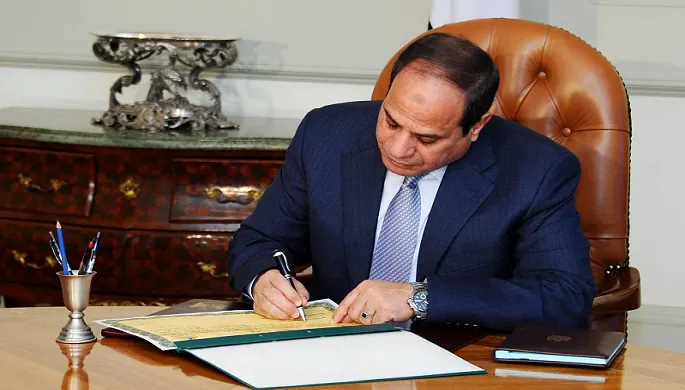
On September 29, 2026, Egyptian President Abdel Fattah El-Sisi issued Decree No. 402 of 2026, appointing four new deputy heads to the Supreme Constitutional Court. The decree, published in the official gazette, names the new appointees as Counselor Sherine Hafez Mousa Farhoud, Counselor Awad Abd al-Hamid Abdallah Ali Khalifa, Counselor Murad Fikry Habil Qaryaqas, and Judge Dr. Tamer Abd al-Hamid Hamad Farjani.
The Supreme Constitutional Court is Egypt's highest judicial authority, responsible for interpreting the country's constitution and ensuring that laws are in line with its provisions. The appointment of new deputy heads is seen as a significant move to strengthen the court's capabilities and ensure its continued independence. The four new appointees bring a wealth of experience and expertise to their new roles.
Counselor Sherine Hafez Mousa Farhoud, one of the new appointees, has a long and distinguished career in the Egyptian judiciary. She has served in various capacities, including as a judge in the Court of Cassation and as a member of the State Council. Her appointment as a deputy head of the Supreme Constitutional Court is seen as a recognition of her expertise and dedication to the Egyptian judicial system.
The other three appointees also have impressive credentials and experience in the Egyptian judiciary. Counselor Awad Abd al-Hamid Abdallah Ali Khalifa has served as a judge in the Court of Appeals and as a member of the Supreme Judicial Council. Counselor Murad Fikry Habil Qaryaqas has experience as a judge in the Administrative Court and as a member of the State Council. Judge Dr. Tamer Abd al-Hamid Hamad Farjani has a background in law and has served as a judge in the Court of First Instance.
The appointments of the four new deputy heads to the Supreme Constitutional Court are seen as part of President El-Sisi's efforts to strengthen the Egyptian judiciary and ensure its independence. The move is also seen as a recognition of the important role that the Supreme Constitutional Court plays in ensuring the rule of law and protecting human rights in Egypt.
The Supreme Constitutional Court has played a crucial role in Egyptian history, particularly during the country's transition to democracy. The court has issued several landmark rulings, including a 2012 ruling that dissolved the Islamist-dominated Constituent Assembly and a 2014 ruling that upheld the country's new constitution. The court's decisions have had a significant impact on Egyptian politics and society.
The appointments of the four new deputy heads to the Supreme Constitutional Court are expected to have a positive impact on the court's work and its ability to uphold the rule of law in Egypt. The move is seen as a step towards strengthening the Egyptian judiciary and ensuring its continued independence.
Key points
- President Abdel Fattah El-Sisi issues decree appointing four new deputy heads to Egypt's Supreme Constitutional Court.