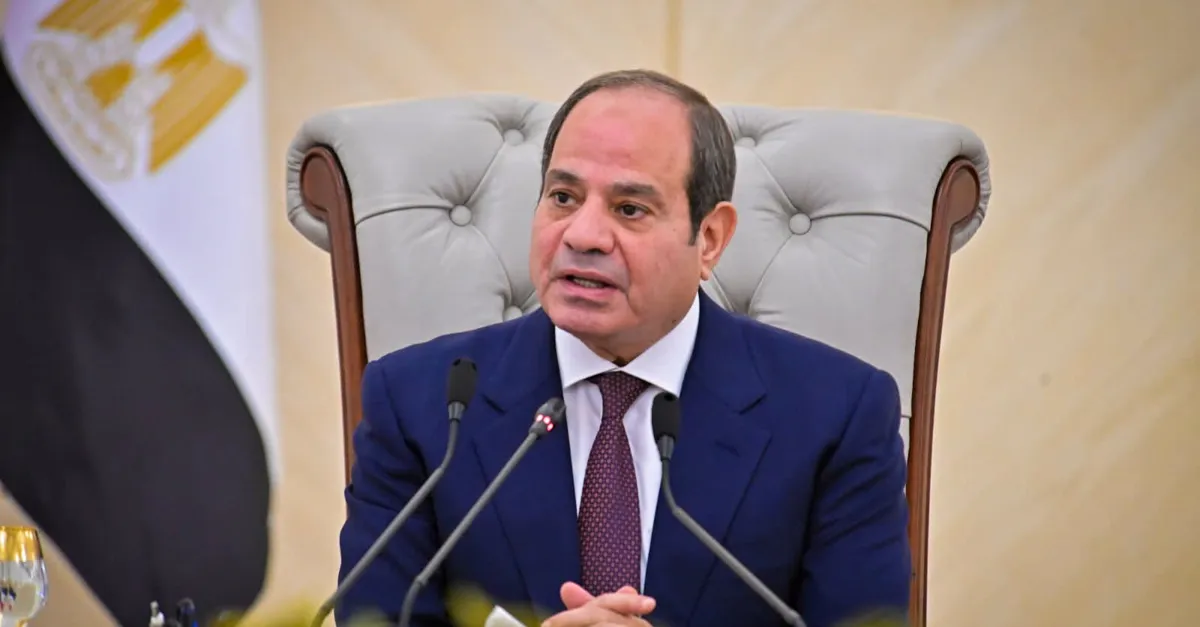
Egyptian President Abdel Fattah El-Sisi has reaffirmed his country's determination to protect its water security, emphasizing that the Nile River is the lifeblood of Egypt, sustaining the nation for millennia. During a meeting of the Supreme Council of the Egyptian Armed Forces, El-Sisi highlighted Egypt's historical and legal right to its Nile water share, which he described as unyielding and unassailable. He stressed that Egypt will continue to defend its water rights through all means provided by international law.
The meeting, held at the Strategic Command headquarters in the new capital, was attended by senior military leaders, including Field Marshal Ashraf Salem Zahr, Commander-in-Chief of the Armed Forces, Minister of Defense and Military Production, and Lieutenant General Ahmed Khalifa, Chief of Staff of the Armed Forces. El-Sisi congratulated the Egyptian Armed Forces on the 53rd anniversary of the October 1973 victory, underscoring the importance of maintaining high levels of combat readiness to defend the nation.
El-Sisi praised the bravery and sacrifices of Egypt's military personnel, saying they had demonstrated unwavering commitment to defending the nation and its people. He also paid tribute to the families of martyrs, assuring them that Egypt would never forget their loved ones and would continue to provide support. The President expressed his admiration for the Egyptian people's resilience in the face of economic challenges, assuring them that the government was working to address these issues.
The Egyptian President reflected on the significance of the October 1973 victory, describing it as a testament to the power of national will and determination. He noted that the victory was the result of meticulous planning and unwavering faith in the nation's capabilities. El-Sisi emphasized that Egypt's progress and prosperity depended on its ability to build on past achievements and address current challenges.
El-Sisi acknowledged the complexities of the current regional landscape, citing ongoing conflicts and global transformations that had significant implications for Egypt and the wider region. Despite these challenges, he expressed confidence in Egypt's ability to navigate these complexities, citing the nation's rich history, the resilience of its people, and the strength of its institutions.
The President also addressed the Palestinian issue, reaffirming Egypt's commitment to a two-state solution based on international legitimacy. He recalled Egypt's peace treaty with Israel, which he described as a demonstration of the possibility of peaceful coexistence. El-Sisi emphasized that Egypt would continue to support the Palestinian people and reject any attempts to undermine their rights or displace them from their land.
In conclusion, El-Sisi reiterated Egypt's determination to protect its national security and water rights, emphasizing that these were non-negotiable. He expressed his conviction that Egypt would continue to play a constructive role in regional and international efforts to promote peace, stability, and prosperity.
Key points
- The President emphasized Egypt's historical and legal right to its Nile water share.
- El-Sisi stressed the importance of maintaining high levels of combat readiness to defend the nation.
- The President reaffirmed Egypt's commitment to a two-state solution to the Palestinian issue.