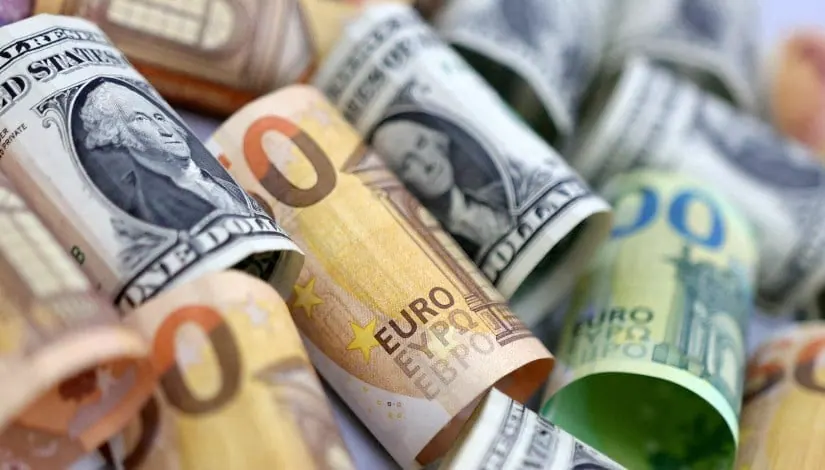
The Egyptian pound has exhibited remarkable stability against various foreign and Arab currencies at the beginning of Monday's trading, September 21, 2026. According to the Central Bank of Egypt, the stability is reflected in the consistent exchange rates within the banking sector. This steady trend indicates a calm foreign exchange market. The Central Bank's rates serve as a benchmark for the country's financial transactions. Egypt's economy has shown resilience despite global fluctuations. The stability of the pound is crucial for Egypt's trade and investment.
The exchange rates for major currencies against the Egyptian pound are as follows: The British pound sterling recorded a buying price of 69.6 pounds and a selling price of 69.8 pounds. The Swiss franc stood at a buying price of 63.2 pounds and a selling price of 63.4 pounds. The euro registered a buying price of 59.7 pounds and a selling price of 59.8 pounds. These rates reflect a stable market condition. The Central Bank of Egypt updates these rates regularly. The rates are crucial for importers and exporters.
The US dollar, a key currency in international transactions, showed a buying price of 52.0 pounds and a selling price of 52.1 pounds. Other major currencies also exhibited stability: the Canadian dollar at 37.1 pounds for buying and 37.2 pounds for selling, and the Australian dollar at 37.0 pounds for buying and 37.1 pounds for selling. The Japanese yen, often seen as a safe-haven currency, recorded 33.1 pounds for buying and 33.2 pounds for selling for 100 yen. These stable exchange rates facilitate smooth international trade.
The Central Bank of Egypt also reported stable exchange rates for several Arab currencies. The Kuwaiti dinar, a currency with significant value, stood at 169.0 pounds for buying and 169.5 pounds for selling. The Bahraini dinar recorded 137.8 pounds for buying and 138.2 pounds for selling. The Omani rial, another key currency in the region, showed 134.9 pounds for buying and 135.3 pounds for selling. These rates highlight Egypt's strong economic ties with Arab nations. The stability supports bilateral trade.
In addition to the aforementioned currencies, the Qatari riyal, Emirati dirham, and Saudi riyal also showed stability. The Qatari riyal recorded 14.3 pounds for both buying and selling. The Emirati dirham stood at 14.1 pounds for buying and 14.2 pounds for selling. The Saudi riyal, widely used in trade, registered 13.8 pounds for buying and 13.9 pounds for selling. These stable exchange rates foster economic cooperation between Egypt and these countries. The consistency aids in planning investments.
The stability of the Egyptian pound against major currencies is also reflected in the exchange rates of some European currencies. The Danish krone recorded 8.0 pounds for both buying and selling. The Norwegian krone stood at 5.5 pounds for both buying and selling. The Swedish krone also showed stability at 5.3 pounds for both buying and selling. These rates indicate a calm foreign exchange market. The stability supports Egypt's trade with European nations.
The consistent exchange rates underscore the resilience of Egypt's economy. The Central Bank of Egypt plays a crucial role in maintaining this stability. The bank's efforts ensure a stable foreign exchange market, which is vital for Egypt's economic growth. The stability of the pound against major currencies boosts investor confidence. Egypt's strategic location and economic reforms contribute to its economic stability. The country continues to navigate global economic fluctuations effectively.
Key points
- Egyptian pound shows stability against major foreign and Arab currencies.
- Central Bank of Egypt reports consistent exchange rates for various currencies.
- Stability of the pound supports Egypt's trade and investment.