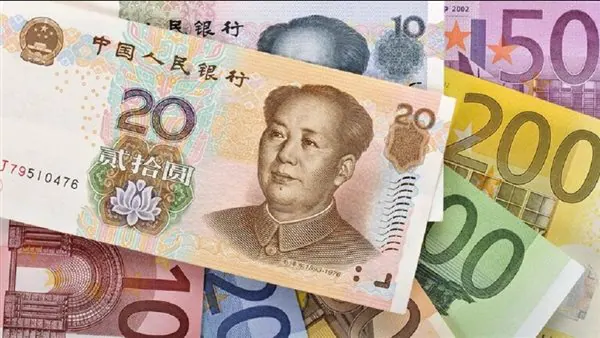
The Chinese yuan experienced a decline of around 10 piasters against the Egyptian pound in major Egyptian banks on Wednesday, September 23, 2026. This development occurs as efforts to reduce reliance on the US dollar in certain transactions among BRICS nations gain momentum, with an emphasis on enhancing financial and trade cooperation between member countries.
According to the latest updates from Egyptian banks, the Chinese yuan's exchange rates against the Egyptian pound are as follows: In the Central Bank of Egypt, the purchase price is 7.65 pounds, and the selling price is 7.67 pounds. In the National Bank of Egypt, the purchase price is 7.65 pounds, and the selling price is 7.68 pounds. Similarly, in Bank of Egypt, the purchase price is 7.65 pounds, and the selling price is 7.68 pounds.
The Chinese yuan, also known as the Renminbi, is the official currency of the People's Republic of China. Its significance on the global financial scene has grown in tandem with China's substantial economic growth and the expansion of its external trade. In recent years, China has been promoting the use of the yuan in settling trade transactions with several countries, particularly within the context of growing economic relations with Asian, African nations, and partners in the Belt and Road Initiative.
The Chinese currency is available in various paper and coin denominations. The paper denominations include 1 yuan, 5 yuan, 10 yuan, 20 yuan, 50 yuan, and 100 yuan. The coin denominations include 1 yuan, 5 jiao, and 1 jiao. Chinese banknotes and coins feature a range of symbols and elements associated with national identity, along with security features designed to minimize counterfeiting.
The yuan has gained increasing importance in the global financial system, driven by China's economic expansion and growing external trade. It has also become part of the reserves of some central banks, reflecting its growing presence in global markets. However, the Chinese currency does not operate under a completely free-floating exchange rate system, as the People's Bank of China intervenes in managing the exchange rate and determining its fluctuation range.
The movement of the yuan against the Egyptian pound is influenced by several factors, including China's economic performance and growth rates, the policies of the People's Bank of China and interest rates, the movement of the US dollar against major currencies, the volume of trade between Egypt and China, levels of demand for the yuan from companies and importers, and global economic and political developments.
Looking ahead, the movement of the yuan against the Egyptian pound is expected to remain linked to global market developments, monetary policies in China and Egypt, and the movement of the US dollar and trade levels between the two countries.
Key points
- The Chinese yuan declined against the Egyptian pound on Wednesday, September 23, 2026, with a drop of around 10 piasters in major Egyptian banks.
- The Central Bank of Egypt's current exchange rate for the yuan is a purchase price of 7.65 pounds and a selling price of 7.67 pounds.
- The growing importance of the yuan in the global financial system is driven by China's economic expansion and growing external trade.