The Bahraini dinar saw a notable decline against the Egyptian pound on Sunday, October 4, 2026, in Egyptian banks. According to reports, the dinar fell by around 10 piasters. This development has garnered attention from financial analysts and individuals involved in foreign exchange transactions. The fluctuation in currency exchange rates can impact trade, investment, and economic relations between Egypt and Bahrain.
In the Central Bank of Egypt, the Bahraini dinar was traded at a buying price of 138.50 pounds and a selling price of 138.89 pounds. This rate reflects the official stance on the dinar's value in the Egyptian market. Other banks in Egypt also recorded similar rates, with slight variations. The exchange rates can influence the competitiveness of Egyptian exports and imports.
Major Egyptian banks, such as the National Bank of Egypt and Banque Misr, recorded the following rates: National Bank of Egypt - buying: 136.37 pounds, selling: 138.83 pounds; Banque Misr - buying: 136.55 pounds, selling: 138.83 pounds. These rates indicate a relatively stable trend in the dinar's value against the pound across different banks.
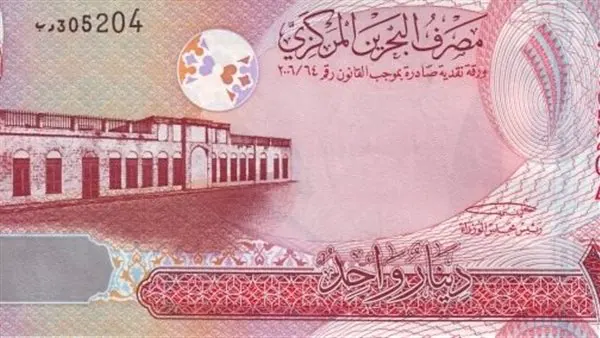
The Bahraini dinar, abbreviated as BHD, is the official currency of the Kingdom of Bahrain and is issued by the Central Bank of Bahrain. It is considered one of the strongest Arab currencies, with a high exchange rate compared to many global currencies. The dinar was first introduced in 1965, replacing the Gulf rupee.
The Bahraini dinar comes in various denominations, including paper notes and coins. The paper notes are available in ½ dinar, 1 dinar, 5 dinars, 10 dinars, and 20 dinars, each featuring distinct colors and designs that reflect Bahrain's heritage. The coins are available in 5 fils, 10 fils, 25 fils, 50 fils, and 100 fils (0.1 dinar).
The Bahraini dinar is considered a stable currency globally, closely tied to the US dollar, which enhances its stability. It is widely used in commercial transactions in the Gulf region, particularly in the banking, energy, and financial services sectors. Bahrain's strong economy, driven by its oil and financial sectors, supports the dinar's status as a reliable currency among investors.
Several factors influence the dinar's exchange rate, including its peg to the US dollar, Bahrain's economic performance, especially in the oil sector, demand from companies and investors, monetary policies set by the Central Bank of Bahrain, and changes in global currency exchange rates. These factors can contribute to fluctuations in the dinar's value against the Egyptian pound.
Key points
- The Bahraini dinar's stability and strength are attributed to Bahrain's robust economy and its peg to the US dollar.