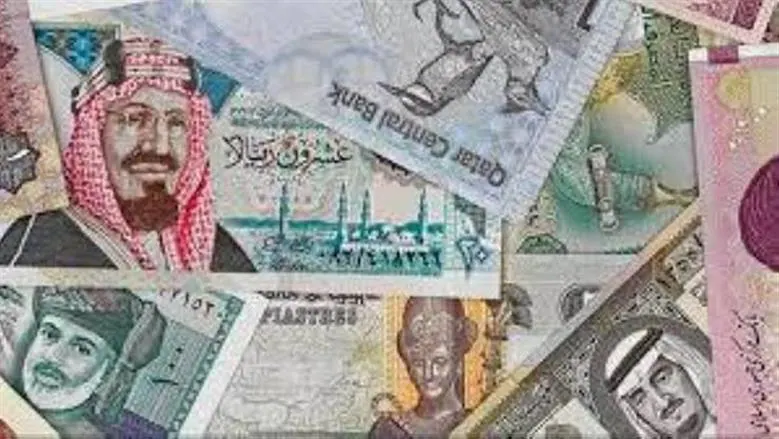
The exchange rates of Gulf currencies against the Egyptian pound have garnered significant attention in the Egyptian banking market on Saturday, September 26, 2026. This interest is primarily driven by the fluctuations in the values of the Kuwaiti dinar, Saudi riyal, Emirati dirham, Qatari riyal, Bahraini dinar, and Omani riyal. These rates are crucial for individuals and businesses involved in international transactions, travel, and remittances.
The exchange rates of these currencies vary from one bank to another, based on the official websites of Egyptian banks. Consequently, slight differences are observed in the buying and selling prices according to each bank's policy. Banks such as QNB Egypt and Abu Dhabi Islamic Bank regularly announce these exchange rates. The Kuwaiti dinar's exchange rate ranges between 160.85 and 167.04 pounds for buying and between 167.31 and 168.36 pounds for selling.
The Saudi riyal, being one of the most closely watched Gulf currencies in Egypt, has an exchange rate that ranges between 13.68 and 13.77 pounds for buying and between 13.80 and 13.81 pounds for selling. This is largely due to the significant trade, travel, and financial transactions between Egypt and Saudi Arabia. The stability and fluctuations of the riyal have a considerable impact on the Egyptian economy.
The Emirati dirham's exchange rate against the Egyptian pound stands between 13.99 and 14.07 pounds for buying and between 14.02 and 14.11 pounds for selling. Meanwhile, the Qatari riyal's exchange rate ranges between 13.33 and 14.18 pounds for buying and up to 14.21 pounds for selling. These rates are essential for market participants and individuals involved in transactions with these countries.
The Bahraini dinar's exchange rate is between 132.44 and 133.95 pounds for buying and between 136.54 and 137.48 pounds for selling. The Omani riyal, another significant currency, is priced at around 129.77 pounds for buying and 133.74 pounds for selling. These exchange rates are vital for trade and investment activities between Egypt and these Gulf nations.
The variations in exchange rates among different banks are attributed to their individual policies and market strategies. Some banks may offer more competitive rates to attract customers, while others may adjust their rates based on market demand and supply. It is essential for individuals and businesses to monitor these rates to optimize their foreign exchange transactions.
Understanding the current exchange rates of Gulf currencies against the Egyptian pound is crucial for making informed decisions in the foreign exchange market. These rates can impact various sectors, including trade, tourism, and remittances. As the Egyptian economy continues to evolve, keeping track of these exchange rates will remain vital for market participants and policymakers alike.
Key points
- The exchange rates of Gulf currencies against the Egyptian pound vary among different banks.
- The Saudi riyal and Kuwaiti dinar are among the most closely watched Gulf currencies in Egypt.
- The exchange rates of these currencies impact trade, travel, and remittances between Egypt and Gulf nations.