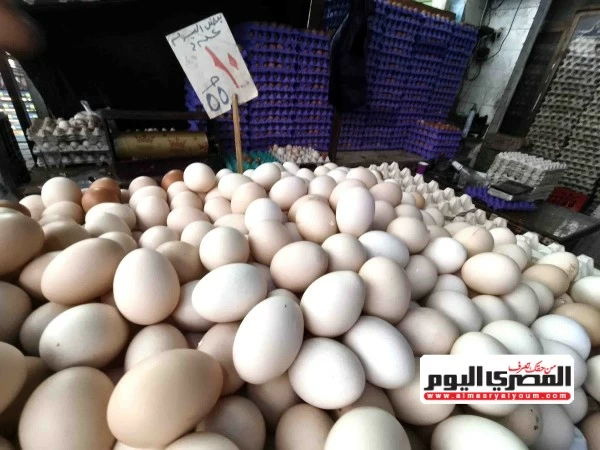
Egypt's egg prices have surged in recent weeks, driven by increased production costs and a decline in supply. According to Abdel Aziz El-Sayed, head of the Poultry Division at the Egyptian Federation of Chambers of Commerce, the country's egg production reached 17.5 billion eggs, exceeding previous estimates of 16 billion eggs. This led to a surplus in the market, causing prices to drop to between 60 and 65 pounds per egg.
However, the low prices resulted in significant losses for many producers, particularly small-scale farmers who could not absorb the costs. El-Sayed noted that these producers have exited the market, reducing the overall supply and driving prices back up. Currently, egg prices have reached around 115 pounds per egg, which is close to the actual production cost with a minimal profit margin.
El-Sayed attributed the price increase to various factors, including a rise in the cost of feed, which has increased by around 1,500 pounds per ton in recent days. He questioned the logic of immediately passing on these costs to consumers, given that the country has a strategic reserve of essential commodities that can last for several months.
The head of the Poultry Division emphasized the need for stricter monitoring of the feed market and production costs to protect both producers and consumers. He suggested that a more balanced approach is required, rather than relying solely on market forces. El-Sayed proposed the development of a system that ensures fair prices for consumers while allowing producers to cover their costs.
El-Sayed also addressed concerns about the impact of egg exports on domestic prices, stating that the quantities exported were relatively small and could not have caused the current price surge. He emphasized that the main drivers of the price increase are changes in supply and demand, as well as the exit of producers from the market.
The demand for eggs is expected to remain strong, particularly with the start of the new school year. El-Sayed noted that eggs are a convenient and affordable source of protein, especially for families with children. He stressed the importance of maintaining a stable supply of eggs at reasonable prices.
Finally, El-Sayed discussed the current prices of poultry, stating that the price of white poultry is around 69 pounds per kilogram at the farm gate, while consumers pay around 80 pounds per kilogram after adding distribution costs. He concluded that finding a balance between protecting producers and consumers is crucial to ensuring the long-term sustainability of Egypt's poultry sector.
Key points
- Egypt's egg production reached 17.5 billion eggs, exceeding previous estimates
- The country's poultry sector faces challenges due to increased production costs and reduced supply
- Stricter monitoring of the feed market and production costs is necessary to protect producers and consumers