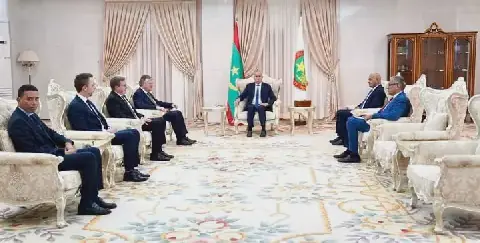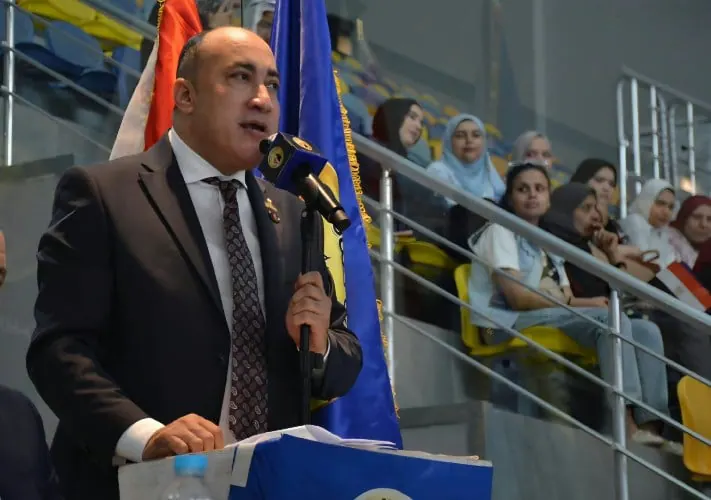
Egyptian parliamentarian Amr Rashad, a member of the Housing and Values committees in the Senate and head of the Giza Central Sector of the Homeland Protection Party, highlighted the significance of a recent meeting convened by President Abdel Fattah El-Sisi. The meeting, which brought together government officials, governors, and leaders of state institutions, aimed to unify efforts and enhance coordination among various state institutions. Rashad emphasized that the meeting reflected a comprehensive vision for managing the current stage.
Rashad noted that the meeting's importance lies not only in the diversity of participants but also in the clear message it conveyed. He stated that addressing challenges and protecting state capabilities cannot be achieved by the efforts of a single institution, but rather through a comprehensive system that involves state institutions and society. This approach enables local expertise to become part of the decision-making process and improves performance on the ground.
The parliamentarian highlighted the President's emphasis on societal awareness, placing this issue at the forefront of tools for protecting national security. Rashad explained that building genuine awareness does not mean preventing differences or criticism, but rather developing the ability to read information correctly and distinguish between facts and rumors. This is particularly crucial in light of rapid developments in communication and information dissemination.
Rashad pointed to the experiences of the region over the past years, which have shown that a state's strength is not measured solely by the size of its institutions or economic capabilities. Rather, it is determined by the cohesion of these institutions and their ability to work together, maintaining state continuity and citizen interests despite various pressures and challenges.
The senator noted that referencing the post-2011 period carries an important message regarding the value of institutional stability. He stressed that preserving state institutions and their cohesion is a fundamental basis for any serious reform and development efforts. Building the future requires a state capable of planning, implementation, and responding to changes without losing its bearings or national priorities.
Regarding the economic file, Rashad emphasized that successive regional and international challenges necessitate dealing with state resources more efficiently. This involves not only increasing resources but also maximizing returns on existing assets and capabilities, improving spending efficiency, and enhancing management mechanisms. This approach will enable the Egyptian economy to absorb shocks and continue implementing development plans.
Rashad concluded by emphasizing that the current stage requires more in-depth institutional coordination, efficient management, citizen-centric services, and societal awareness capable of accurately reading the situation. He stressed that the state's strength lies in its ability to work as a cohesive system and that building trust between citizens and state institutions is linked to tangible performance and results in daily life.
Key points
- The Egyptian parliamentarian emphasized the need for coordination among state institutions and citizen participation in protecting stability.
- The parliamentarian highlighted the importance of societal awareness in protecting national security.
- The senator stressed the need for efficient management and citizen-centric services in the current stage.