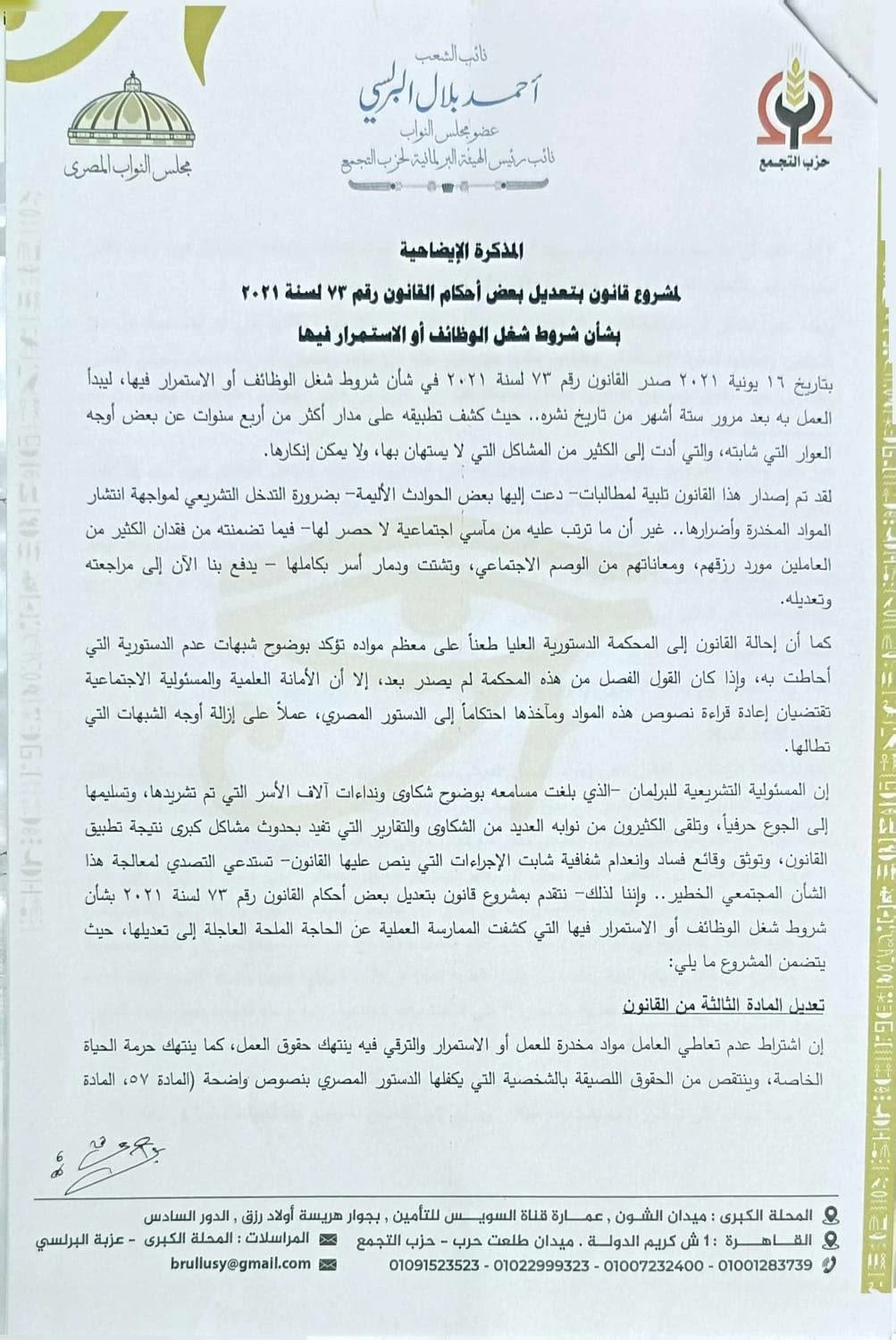
The Egyptian parliament has agreed to review a proposed law to amend certain provisions of Law No. 73 of 2021, which regulates drug testing for workers. The law, introduced by MP Ahmed Bilal Al-Barlusi and 60 other MPs, aims to balance the need to protect society and workplaces from the dangers of drug abuse with the need to protect workers' rights and dignity. The proposed changes have been referred to a joint committee of the parliamentary committees on constitutional and legislative affairs, labor, and health.
The current law, which has been in effect for over four years, has been criticized for its harsh penalties, including the immediate termination of employment for workers who test positive for drugs. According to the explanatory memorandum of the proposed law, the current law has led to a significant number of workers losing their jobs and being socially ostracized, despite the fact that the law was originally intended to address the problem of drug abuse in the workplace. The memorandum notes that the law has been challenged in the Constitutional Court, with many of its provisions being deemed unconstitutional.
The proposed law seeks to amend Article 3 of the current law, which would require workers to be under the influence of drugs at work and have their performance affected before facing disciplinary action. The proposed changes also include making drug testing a regular, annual procedure, with the relevant authorities determining the specifications of the substances being tested for. Additionally, the proposed law requires that workers be present during testing and that the results be documented in a report.
The proposed law also provides for workers to request a second test to be conducted by a different authority or for a medical examination to be carried out by the Forensic Medicine Authority, without incurring any financial costs. If the test result is positive, a confirmatory test would be conducted within three months. The proposed law emphasizes the need to maintain the confidentiality of the procedures and to protect workers from social stigma.
The proposed law also introduces new provisions for dealing with workers who are struggling with addiction. If it is determined that a worker is struggling with addiction, the employer may suspend them from work for two weeks and refer them to a licensed addiction treatment center. During this time, the worker would be considered to be on sick leave in accordance with the Social Insurance and Pensions Law.
The proposed law also includes transitional provisions to address the cases of workers who have been terminated since the current law came into effect. The proposed law would require the Prime Minister to issue a decision outlining the rules and procedures for reinstating these workers. Additionally, the proposed law would establish a high committee to investigate complaints and reports of corruption or irregularities related to the implementation of the law.
The explanatory memorandum of the proposed law emphasizes that the goal is not to condone the dangers of drug abuse, but rather to address the "collective punishment" that workers and their families face under the current law. The proposed changes aim to strike a balance between protecting workers' rights and dignity and protecting society and workplaces from the dangers of drug abuse.
Key points
- The Egyptian parliament has agreed to review a proposed law to amend the current law on drug testing for workers.
- The proposed law aims to balance the need to protect society and workplaces from the dangers of drug abuse with the need to protect workers' rights and dignity.
- The proposed changes include making drug testing a regular, annual procedure and providing for workers to request a second test or a medical examination.