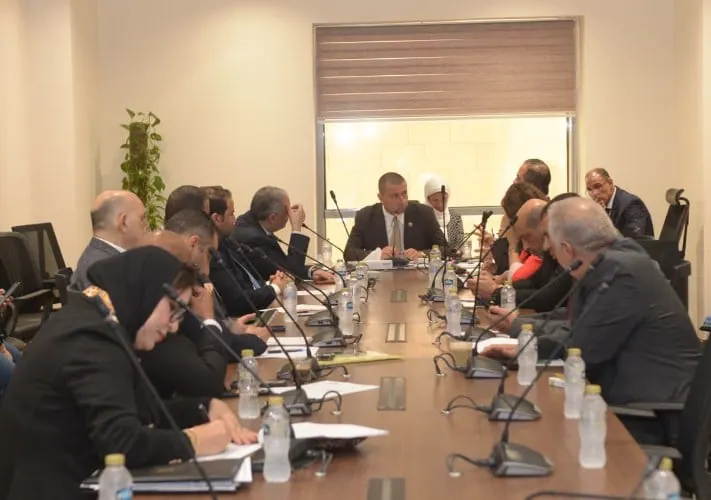
The Egyptian House of Representatives Industry Committee, led by MP Ahmed Bahaa Shalaby, has begun outlining its agenda for the second ordinary session of the third legislative term. The committee held three meetings on October 5, 2026, to discuss its plan of action. The meetings were attended by committee members and focused on finalizing and developing the plan for the upcoming period. The committee agreed to prioritize two main files: enhancing the competitiveness of Egyptian industry through artificial intelligence applications and addressing the potential implications of a European Union decision to halt the export of metal waste to Egypt.
The first file involves examining the Ministry of Industry's plan to utilize artificial intelligence technologies to support research, development, and innovation in factories. This aims to increase productivity, improve product and process quality, and reduce production costs. The committee will explore ways to implement AI in various industries to boost their competitiveness. By leveraging AI, Egyptian industries can improve their efficiency and product quality, making them more competitive in the global market.
The second file concerns the potential impact of the EU's decision to stop exporting metal waste to Egypt. The committee will assess the effects of this decision on the national industry and identify necessary measures to mitigate its consequences. This includes ensuring a stable supply of raw materials for the metal industry. The EU's decision may have significant implications for Egypt's metal industry, and the committee must develop strategies to address these challenges.
According to MP Ahmed Bahaa Shalaby, the committee's agenda reflects its vision for the role it aims to play during the new session. Shalaby emphasized that artificial intelligence is no longer a luxury but a crucial element in enhancing industrial competitiveness and innovation. He stressed that the Egyptian industry must be at the forefront of global technological transformation. The committee's focus on AI and metal waste reflects its commitment to supporting the growth and development of Egypt's industries.
The committee's plan also includes reviewing the status of strategic industrial sectors, such as textiles and building materials, particularly the ceramics industry. Additionally, it will focus on promising sectors that can achieve high growth rates and exports, including pharmaceuticals and engineering industries. The committee aims to address the challenges faced by investors and manufacturers, including developing the Egypt Industrial platform, providing industrial land, reducing financing costs, and simplifying licensing procedures.
The committee will review the actual impact of legislation related to the industrial sector and the labor market, including the law on facilitating industrial licensing procedures. It will also examine competition and equal opportunity laws, as well as the labor law, to ensure a balance between workers' and employers' rights. Furthermore, the committee plans to hold public hearings to discuss various issues, including artisanal mining and integrating the informal economy into the formal sector.
The committee's agenda is open to development and welcomes proposals from its members, industrial unions, chambers, and associations of investors and manufacturers. The final plan aims to reflect the priorities of the Egyptian industry and the needs of various sectors and industrial areas, focusing on issues that directly impact production, competitiveness, investment, and exports. Key points include:
Key points
- The committee will prioritize artificial intelligence applications to enhance industrial competitiveness.
- The committee will address the implications of the EU's decision to halt metal waste exports to Egypt.
- The committee aims to support the growth and development of strategic industrial sectors.