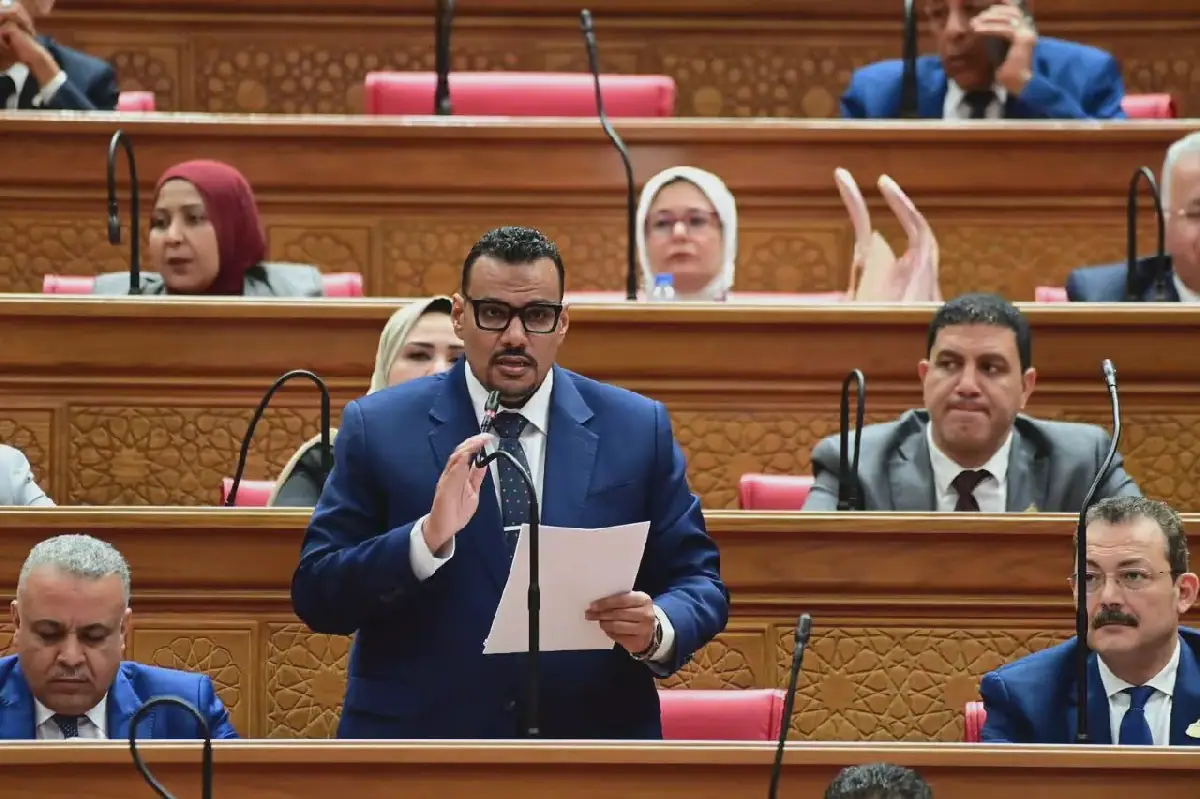
A member of Egypt's House of Representatives, Ahmed El-Ajouz, has submitted a request for information to the Prime Minister, Minister of Transport, Minister of Local Development and Environment, Minister of Finance, Minister of Water Resources and Irrigation, and Minister of Planning and Economic Development. The request concerns the plight of citizens whose properties were expropriated for the expansion of the Cairo Ring Road, a vital transportation artery serving millions of citizens daily.
El-Ajouz stated that many citizens who had their properties expropriated, including residential, commercial, industrial, or agricultural properties, have not received their financial compensation. They have faced slow and complicated procedures, and it has taken years for them to receive their compensation. He cited the example of residents in the Western Arc area of Imbaba, who have been waiting for years to receive their compensation.
The delayed payment of compensation has led to a decrease in its value due to inflation and rising prices. El-Ajouz also pointed out that the compensation values are weak and do not match the real prices of the properties that were expropriated. He attributed this to the lack of transparent mechanisms for evaluating properties and the absence of a clear right for citizens to object and request a reassessment.
El-Ajouz emphasized that his request does not contradict the state's development plans or the construction of infrastructure networks. Instead, it highlights the need to ensure that citizens receive fair compensation, paid in advance, as stipulated in the Constitution. He stressed the importance of balancing public interest and citizens' rights, ensuring that the two do not conflict due to the absence of necessary criteria in the property expropriation system.
El-Ajouz pointed out that the Constitution, specifically articles 33, 35, and 78, protects private property and stipulates that it can only be expropriated for public interest, with fair compensation paid in advance. He requested that the government clarify the availability of alternatives to property expropriation, such as modifying project paths or providing alternative compensation, including housing units or agricultural land.
The parliament member asked about the procedures taken by the government to address citizens' complaints regarding low compensation values, delayed payments, and slow procedures within government agencies. He also requested a review of the criteria for estimating the value of expropriated properties, questioning whether it is fair to compensate a residential unit owner with 40,000 EGP for a single room, given current prices.
El-Ajouz concluded by requesting that his inquiry be referred to the relevant committee in the House of Representatives for discussion and investigation into the causes of low compensation values and delayed payments.
Key points
- The Egyptian government is urged to revisit its property expropriation policies to ensure fair compensation for citizens.