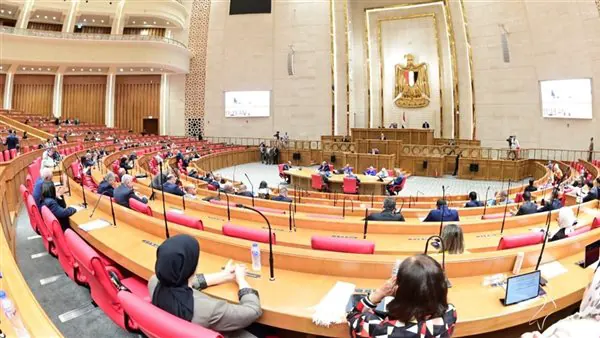
Egyptian parliament member Ahmed Fouad Abaza, a member of the House of Representatives and the Arab Parliament, has submitted a parliamentary question to the Speaker of the House of Representatives, Hesham Badawi, to be directed to the Prime Minister and the Ministers of Education, Technical Education, Labor, and Industry. The question concerns the government's plan to overhaul the technical education and vocational training system.
Abaza emphasized the need for the government to revamp the technical education system to ensure that it meets the actual needs of the labor market. He pointed out that the current system produces graduates who lack the necessary skills required by the industry, highlighting the need for collaboration between educational institutions and industrial partners to determine the required skills and modern technologies.
The lawmaker questioned the government's plan to involve industrial sectors in the development and update of technical education and vocational training programs, ensuring that they are consistent with production needs. He also inquired about the possibility of implementing a model where factories partner with educational institutions to provide students with practical training during their studies.
Abaza suggested that the government should establish sectoral skills councils comprising representatives from factories, educational institutions, and training centers. These councils would identify future job requirements and the necessary specializations for each industry, as well as review educational programs periodically.
The parliament member also asked about the possibility of launching a national digital platform that connects technical schools and training centers with factories, providing updated data on required jobs, graduate numbers, and in-demand skills. This, he believes, would enable students to pursue specializations that guarantee real job opportunities.
Abaza stressed that linking education to industry could be a turning point in addressing employment challenges by preparing qualified technical labor, reducing the cost of training graduates, and increasing the competitiveness of Egyptian factories. He emphasized that the success of Egypt in attracting new industrial investments should coincide with providing a capable workforce to operate modern technology.
Abaza considered the qualified Egyptian worker as one of the most important elements of the national industry's strength, and that investing in skills is just as important as investing in factories and equipment. He urged the government to take immediate action to address the existing gap between technical education and industry needs.
Key points
- The Egyptian government is expected to provide a comprehensive plan to revamp the technical education and vocational training system.
- The plan should involve collaboration with industrial partners to determine required skills and modern technologies.
- A national digital platform may be launched to connect technical schools and training centers with factories.