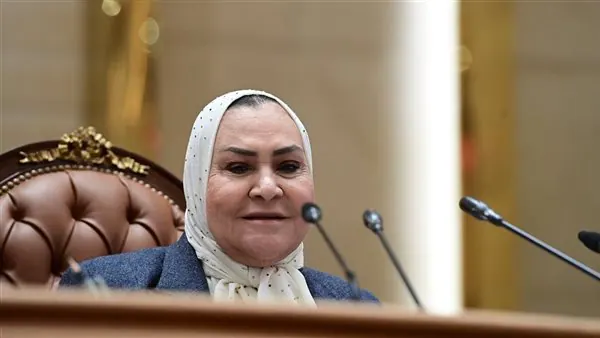
Egyptian parliament member Abela Al-Hawari, a member of the Legislative Committee in the House of Representatives, has outlined the conditions for submitting law projects to parliament. According to Al-Hawari, the entities that can submit such legislation are the government and members of parliament. She emphasized that for a law project to be considered, it must be supported by at least 60 members of parliament, as per the rules of procedure.
Al-Hawari's statements shed light on the parliamentary procedures in Egypt. The Legislative Committee plays a crucial role in reviewing and discussing proposed laws. The requirement of 60 members' support aims to ensure that only substantial and widely-supported proposals are brought before the parliament. This process helps maintain the efficiency and effectiveness of the legislative body.
Previously, Fawida Al-Naqash, a leading figure in the Gathering of Egypt party, stressed the importance of involving political parties in preparing the new Local Administration Law. She argued that this involvement would guarantee that the law reflects the needs of the current political reality and the requirements of party work on the ground. This inclusive approach aims to achieve national consensus and enhance the law's effectiveness.
Al-Naqash highlighted the significance of benefiting from the experiences and diverse visions of various parties when discussing the law's provisions. She criticized the closed-list system, citing its shortcomings in previous experiments and its failure to achieve the desired level of effective political representation. Al-Naqash emphasized the need to avoid relying on this system in the upcoming local elections.
The discussion around the Local Administration Law and the parliamentary procedures underscores the complexities of Egypt's political landscape. The law aims to reorganize local governance and administration. Effective and representative local governance is crucial for addressing citizens' needs and promoting development.
Fawida Al-Naqash called for a broad societal dialogue and cooperation between the government and political parties to prepare a balanced law. Such a law would contribute to building a more efficient and representative local administration system, enhancing the path of political reform and local development. This collaborative approach is seen as essential for achieving sustainable and inclusive growth.
The involvement of various stakeholders, including political parties and parliament members, is vital for the success of Egypt's legislative and governance processes. By working together, these entities can ensure that laws and policies meet the needs of the Egyptian people and promote the country's development. The discussions around the Local Administration Law reflect the ongoing efforts to enhance Egypt's political and administrative systems.
Key points
- Egyptian parliament member Abela Al-Hawari outlines conditions for submitting law projects to parliament.
- Political parties stress the importance of involvement in preparing the new Local Administration Law.
- The discussions highlight the complexities of Egypt's political landscape and the efforts to enhance governance and development.