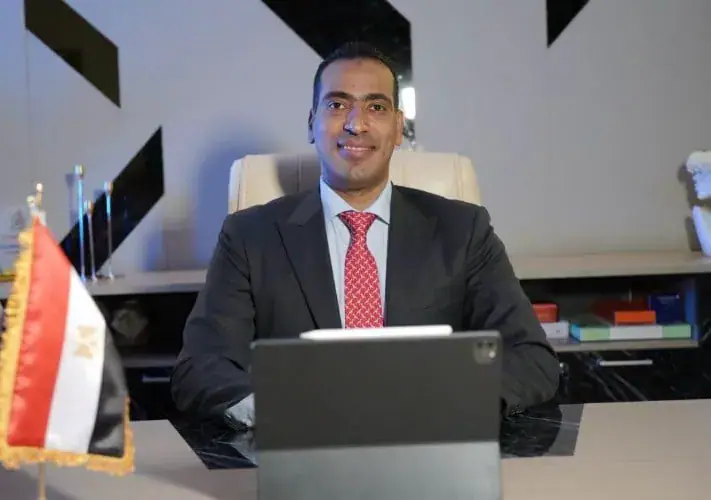
Egyptian Parliament member Mahmoud Hussein Taher, deputy chairman of the Communications and Information Technology Committee, has underscored key points from President Abdel Fattah El-Sisi's recent speech at the Third Medical Conference of the Faculty of Medicine, Egyptian Armed Forces. The President's statements highlighted the importance of investing in human capital, developing education, and keeping pace with rapid technological advancements as fundamental pillars for enhancing Egypt's capabilities. Taher emphasized that these statements reflect a significant shift towards comprehensive development.
Taher noted that President El-Sisi's emphasis on education quality and merit as the true criteria for progress, rather than merely expanding the number of institutions and graduates, marks a crucial transition. This new phase focuses on building competencies and qualifying generations with the scientific and technological skills required to compete regionally and internationally. According to Taher, this approach aligns with the requirements of the labor market and digital transformation.
The announcement of establishing six new faculties at the Egyptian Knowledge University, including the Faculty of Computers and Artificial Intelligence, represents a significant step towards expanding technology-related specialties. This development aims to prepare specialized cadres capable of dealing with artificial intelligence applications and modern technologies, supporting the state's efforts to build a knowledge-based economy.
President El-Sisi's directives to develop eight universities into global leaders by updating facilities, educational systems, and implementing digitalization underscore the importance of digital transformation. This transformation is no longer just about improving services but has become an essential element in updating educational institutions, enhancing their efficiency, and enabling them to provide education that meets international standards.
The expansion of partnerships and twinning agreements with global universities and scientific institutions is a vital mechanism for transferring knowledge, experiences, and localizing technology. The cooperation protocol between the Egyptian Armed Forces' Faculty of Medicine and the Royal College of Surgeons in Ireland serves as a model for institutional cooperation that can be replicated in various scientific and technological fields.
Taher stressed that investing in education, nurturing talented individuals, and encouraging educational endowments are crucial steps towards ensuring the sustainability of the educational system. He emphasized that building a qualified Egyptian workforce in technology, artificial intelligence, and modern sciences is essential for enhancing the national economy's competitiveness and achieving sustainable development.
The Egyptian government is taking concrete steps to implement these directives, focusing on comprehensive development that includes human, technological, and educational aspects. These efforts aim to improve the quality of education, enhance the efficiency of educational institutions, and prepare future generations for the challenges of the rapidly changing world.
Key points
- The Egyptian government is prioritizing education and technological advancements to drive sustainable development.