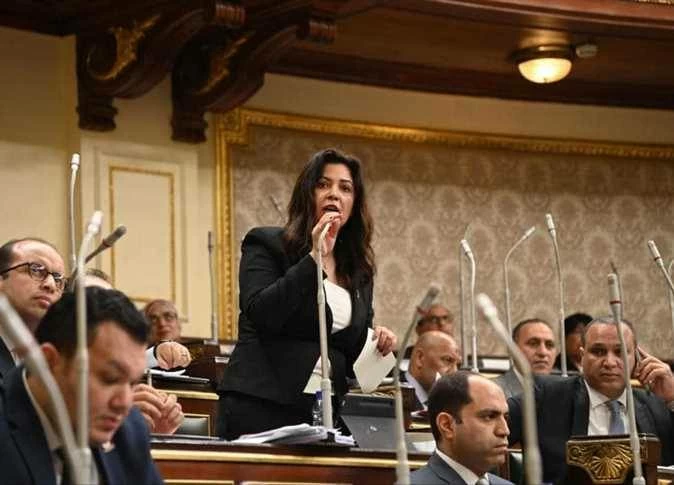
Egyptian parliament member Amira El-Adly has emphasized the need for a comprehensive approach to address women's rights and societal awareness in Egypt. She argues that the battle for awareness in Egyptian society should not be limited to combating terrorism and extremism but also extend to tackling ignorance, discrimination, and racism. El-Adly stresses that the current state of affairs necessitates a collective effort from legislative, executive, and cultural institutions.
El-Adly highlights that 18% of women in Egypt are responsible for supporting their families, according to recent health surveys. She believes that this statistic underscores the significant role women play in providing for their families. However, El-Adly also notes that despite this reality, certain narratives continue to restrict women's roles to domestic work, questioning their right to education, employment, and societal participation.
The parliament member also expresses concern about the inadequate attention given to teaching the history of the Egyptian women's movement. El-Adly argues that young generations are not receiving sufficient knowledge about the struggles and contributions of pioneering Egyptian women who fought for women's rights and empowerment. She emphasizes that the Egyptian women's movement has played a crucial role in expanding women's participation in politics and enhancing their rights.
El-Adly criticizes the current state of education, stating that the history of women's movements in Egypt does not receive sufficient attention. She advocates for revising the way women's history is presented to ensure that new generations are aware of the role models who have contributed to changing societal realities. El-Adly also warns about the absence of a national anti-discrimination commission, which she believes leaves a gap in institutional efforts to combat discrimination and racism.
The parliament member stresses that addressing women's issues should be based on their actual contributions to society, rather than stereotypes that undermine their capabilities or diminish their economic responsibilities. El-Adly also notes that while there are legislative efforts to combat discrimination, a comprehensive approach that includes societal awareness and institutional tools is necessary to tackle discriminatory practices.
El-Adly calls for a more active role from the Ministry of Culture in promoting awareness and combating intellectual extremism and discrimination. She questions the extent to which public libraries and cultural institutions contribute to disseminating knowledge, correcting misconceptions, and countering ideas that hinder societal progress. El-Adly emphasizes the importance of integrating cultural, legislative, and educational efforts to ensure a sustained and comprehensive approach to addressing discrimination.
In conclusion, El-Adly stresses that building societal awareness requires a comprehensive vision that encompasses legislative development, enhancing the role of cultural institutions, and revising educational content related to women's history. She emphasizes that addressing ideas that undermine women's rights requires not only laws but also a supportive societal culture and institutions capable of translating these principles into tangible practices.
Key points
- The Egyptian parliament member Amira El-Adly calls for a comprehensive approach to address women's rights and societal awareness.
- El-Adly emphasizes the significant role women play in supporting their families, with 18% of women responsible for providing for their families.
- The parliament member stresses the need for a national anti-discrimination commission to combat discrimination and racism.