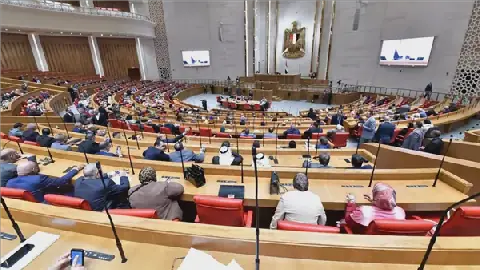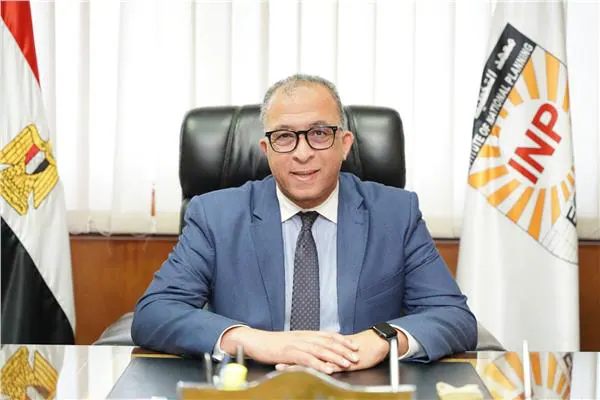
Egypt's National Planning Institute recently hosted its first seminar of the 2026/2027 academic year, titled "The Future of Jobs: An Analytical Reading of International and Regional Reports." The event, led by Dr. Sahr El-Beha'i, director of the Center for Environmental Planning and Development, featured presentations by Dr. Amal Zakaria, director of the Regional Development Center. The seminar drew a number of researchers, specialists, and stakeholders.
The seminar aimed to highlight key trends and changes influencing the future of jobs and labor markets, based on several international and regional reports. These included the "Future of Jobs 2025" report and the working paper "Four Scenarios for the Future of Jobs in the New Economy," both issued by the World Economic Forum. Another report, "Artificial Intelligence and Employment Prospects in the Arab Region," was published by the Economic and Social Commission for Western Asia (ESCWA) and the Arab Labor Organization.
According to Dr. Amal Zakaria, the "Future of Jobs 2025" report revealed a structural shift in the global labor market, involving not only the creation and elimination of jobs but also a reshaping of job nature and required skills. By 2030, approximately 170 million new jobs are expected to be created worldwide, while around 92 million jobs may be lost, resulting in a net gain of 78 million jobs. Dr. Zakaria also noted that routine and administrative jobs are likely to decline as technology assumes a greater role in redistributing tasks between humans and machines.
Dr. Zakaria emphasized that the skills gap is a significant challenge for institutions adapting to rapid changes in the labor market. Around 60% of global workers will need to upgrade or change their skills, with analytical thinking, flexibility, adaptability, and creative thinking becoming essential skills. Additionally, there will be growing demand for artificial intelligence, data analysis, cybersecurity, and technological awareness skills. In Egypt, approximately 49% of skills are expected to change by 2030, highlighting the need to align education and training outputs with future labor market requirements.
The seminar also examined four potential scenarios for the future of the labor market, as outlined in a 2026 World Economic Forum report. These scenarios consider the pace of technological development and the level of human readiness. The scenarios include accelerated progress, an era of displacement, a smart partnership economy, and hindered progress. Dr. Zakaria stressed that enhancing human and institutional readiness is crucial to maximizing the benefits of artificial intelligence applications and mitigating their negative impacts on the labor market.
The report "Artificial Intelligence and Employment Prospects in the Arab Region" was also discussed, focusing on the interaction between technological developments and the structures of Arab economies, labor markets, and demographic characteristics. The analysis explored opportunities and challenges related to artificial intelligence in employment, skills development, and readiness for future requirements. The discussion highlighted the need for policies and strategies to address the potential impacts of technological changes on labor markets and human capabilities.
The seminar concluded that analyzing international and regional reports is essential for anticipating their implications for Egyptian planning, development, and labor markets. This analysis can help identify areas for institutional and human readiness in preparation for upcoming changes, ensuring that Egypt can capitalize on the benefits of artificial intelligence and technological advancements while minimizing the risks of technological unemployment and widening inequality gaps.
Key points
- The National Planning Institute's seminar examined the impact of artificial intelligence on future jobs and labor markets.
- The event featured presentations on key international and regional reports, including "Future of Jobs 2025" and "Artificial Intelligence and Employment Prospects in the Arab Region."
- The seminar emphasized the need for human and institutional readiness to address the challenges and opportunities presented by technological changes in the labor market.