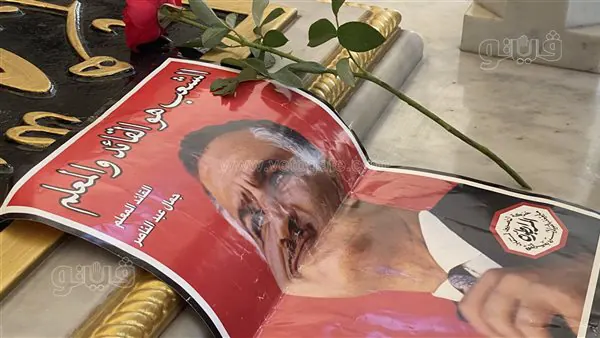
On Monday, September 28, 2026, thousands of Egyptians gathered at the tomb of Gamal Abdel Nasser in Cairo to commemorate the 56th anniversary of his passing. Nasser's daughter, Mona Abdel Nasser, expressed her gratitude to the Egyptian people for their continued support and love for her father. She stated that her father's presence in the hearts of Egyptians remains strong even 56 years after his death.
Mona Abdel Nasser emphasized that her father lived for the Egyptian people, particularly the poor and working class. He was committed to fighting for the rights of every Arab who valued their dignity and nation. His legacy continues to inspire Egyptians, and his daughter reiterated that the nation will never forget him. The event was attended by members of the Nasserist Party and other officials.
Gamal Abdel Nasser was born on January 15, 1918, in the Bakos neighborhood of Alexandria. His father worked as a postal agent in the city. Nasser spent part of his childhood in Alexandria, which held a special place in his heart. He frequently visited the city throughout his life. The anniversary of his death is an opportunity for Egyptians to reflect on his life and achievements.
Nasser's presidency was marked by several key policies aimed at achieving social justice. He implemented measures to support farmers and workers, provided assistance to the poor, and worked to eliminate class distinctions. His administration expanded access to free education and healthcare, established new factories, and created job opportunities. The agrarian reform policies, which redistributed land to farmers, were also a significant part of his agenda.
From a young age, Nasser was interested in politics and actively participated in anti-British occupation protests in 1935. He later attended the Military College, graduating as an officer. Nasser played a crucial role in founding the Free Officers Movement, which was instrumental in the events of 1952. His vision for Egypt was rooted in national liberation, Arab nationalism, and social justice.
Nasser's legacy extends beyond his domestic policies. He was a key figure in the Arab world, advocating for independence and self-determination. His presidency was characterized by a strong sense of national pride and a commitment to social and economic development. As Egypt continues to face challenges, the nation looks back on Nasser's achievements with a sense of nostalgia and appreciation.
The commemoration of Nasser's death serves as a reminder of his enduring impact on Egyptian society. His commitment to the well-being of the Egyptian people, particularly the most vulnerable, has left a lasting legacy. As the nation moves forward, it continues to draw inspiration from Nasser's vision for a more just and equitable society.
Key points
- Thousands gather at Nasser's tomb to honor the late Egyptian president on the 56th anniversary of his death
- Nasser's legacy continues to inspire Egyptians with his commitment to social justice and national liberation
- The anniversary of his death serves as a reminder of his enduring impact on Egyptian society