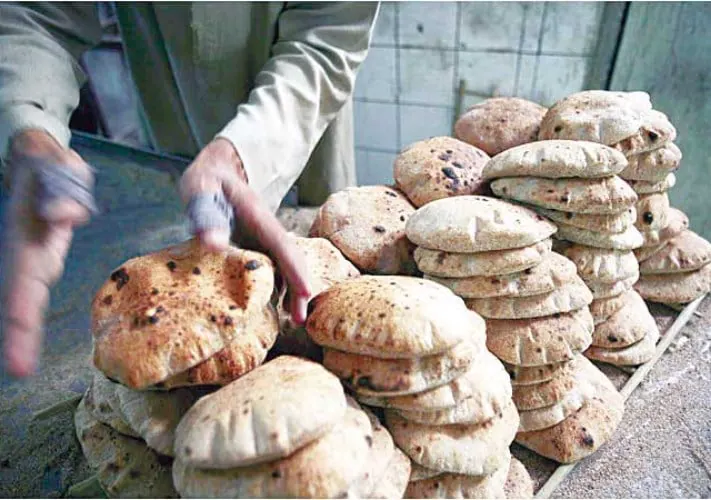
The Egyptian Ministry of Supply and Internal Trade continues to monitor prices and weights of bread, including free-market and tourist bread, as well as "fino" bread. According to Ahmed Kamal, the ministry's spokesperson, bakeries are required to display prices and weights for consumers to ensure adherence to official prices and prevent manipulation. This move aims to protect consumers from unfair practices.
The ministry works to provide regular quantities of wheat for the production of free-market flour through the commodity exchange. This helps stabilize flour and bread prices, as well as weights. Kamal noted that free-market flour consumption in bakeries and mills is approximately 560,000 tons. The ministry's efforts focus on maintaining a stable supply of essential goods.
Recently, the price of a ton of flour increased from around 17,000 Egyptian pounds to 21,000 pounds. Kamal explained that about 70% of the increase in bread production costs is related to flour and other production requirements. The ministry reviews production costs in coordination with the Chamber of Commerce's Bakery Division to ensure fair pricing.
The ministry monitors prices and weights in markets, emphasizing the importance of adhering to the subsidized bread price of 20 piasters per loaf for those with ration cards. Free-market bread, weighing 80 grams, is priced at two Egyptian pounds. Kamal warned that bakeries violating sales regulations or providing less than the required weight will face penalties, including possible imprisonment or license revocation.
Over 3,000 violations were detected in bakeries during the past period, out of more than 40,000 free-market and subsidized bakeries nationwide. Kamal emphasized the agreement to provide wheat quantities to the Grain Industry Chamber. The ministry remains committed to enforcing regulations and protecting consumers.
The Egyptian government continues to work towards stabilizing the prices of essential goods, including bread. By monitoring prices, weights, and production costs, the ministry aims to prevent market manipulation and ensure fair access to affordable bread for all citizens. The public is encouraged to report any irregularities or violations.
The collaboration between the Ministry of Supply and Internal Trade and various industry stakeholders, including the Chamber of Commerce, plays a crucial role in maintaining a stable market. By working together, the government and industry leaders can address challenges and implement effective solutions to ensure the well-being of Egyptian citizens.
Key points
- The Egyptian Ministry of Supply and Internal Trade detected over 3,000 violations in bakeries.
- The price of a ton of flour increased from 17,000 to 21,000 Egyptian pounds.
- The ministry requires bakeries to display prices and weights for consumers.