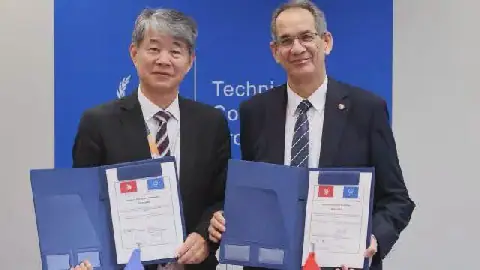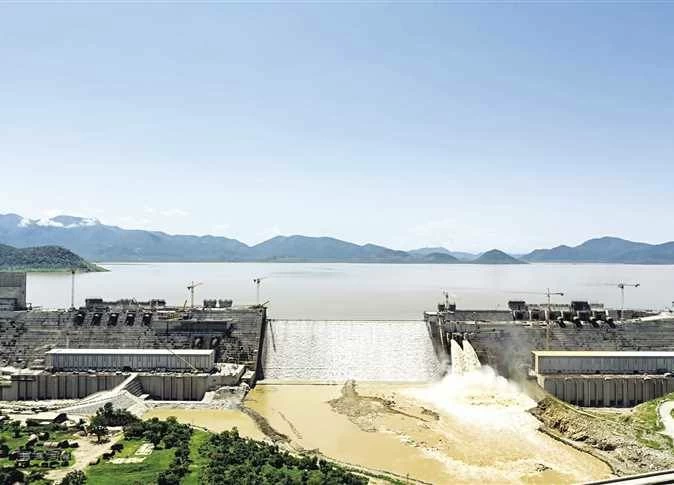
Egyptian Water Resources and Irrigation Minister, Hani Suwelim, recently expressed concerns over the use of power generated by Ethiopia's Renaissance Dam for bitcoin mining. During a press conference, Suwelim questioned the Ethiopian government's priorities, stating that the people of Ethiopia should ask their government whether the electricity produced by the dam has reached households or is being used for other activities, such as bitcoin mining.
The Renaissance Dam has been a topic of discussion since its construction, with Ethiopia aiming to increase its hydroelectric power production and export it to neighboring countries. However, reports have emerged that Ethiopia has contracted with 39 companies to mine bitcoin, with 31 already operational. These companies have agreed to use a significant portion of the country's electricity, with the Ethiopian Electric Power Corporation (EEP) committing to provide at least 98% of the agreed-upon energy.
According to a Bloomberg report, bitcoin mining companies accounted for 35% of EEP's revenue in the last fiscal year, consuming nearly a third of Ethiopia's total electricity production of 9730 megawatts. This has raised concerns that the dam's power is being used for short-term gains rather than long-term development goals. The original aim of the dam was to provide clean energy to the Ethiopian people and export surplus power to neighboring countries.
A report by the Arab Center in Washington, DC, noted that the use of the dam's power for bitcoin mining undermines its original development goals and raises questions about sustainable resource management. The report also highlighted that, despite the dam increasing Ethiopia's electricity generation capacity from 4500 megawatts to 7910 megawatts, only 44% of the population has access to electricity, falling short of the government's target of 100% coverage by 2025.
The report further revealed that mining one bitcoin in Ethiopia requires 6,400,000 kilowatt-hours of energy, equivalent to providing electricity to around 14,950 average Ethiopian households for a year. The low electricity prices in Ethiopia, at around 3.2 cents per kilowatt-hour, have made it an attractive location for bitcoin mining companies, particularly after China's ban on the activity in May 2025.
The cost of mining one bitcoin in Ethiopia is approximately $1990, significantly lower than in the United States or Ireland. This has led to concerns that the country's cheap electricity is being exploited for short-term gains rather than being used to support long-term economic development. The situation has also sparked concerns in Egypt, where the minister's comments highlighted the potential impact on the country's water security.
The Renaissance Dam has been a point of contention between Egypt, Ethiopia, and Sudan, with concerns over its impact on water flows and regional stability. As the situation continues to unfold, it remains to be seen how the Ethiopian government will balance its economic goals with sustainable resource management and the original development objectives of the Renaissance Dam.
Key points
- The use of Renaissance Dam power for bitcoin mining has raised concerns over the dam's original development goals and sustainable resource management in Ethiopia.
- Ethiopia's cheap electricity has made it an attractive location for bitcoin mining companies, with the activity accounting for 35% of the country's electricity revenue.
- The situation has sparked concerns in Egypt over the potential impact on the country's water security and regional stability.