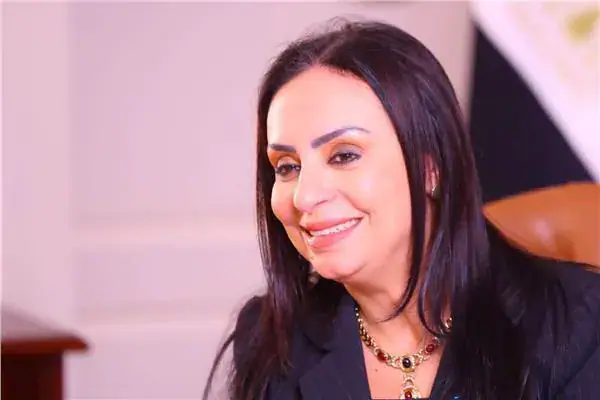
Egyptian Minister of Social Solidarity Dr. Maya Morsi has outlined a vision for the future of social protection in Egypt. This vision goes beyond providing cash assistance to building a system that protects families from falling into poverty and helps those able to work transition from receiving support to production. The minister's comments come ahead of the first International Social Protection Forum, hosted by Egypt on November 23 and 24.
The International Social Protection Forum was first proposed in May 2025 during the celebration of the tenth anniversary of the launch of the conditional cash support program "Takaful and Karama". The forum aims to establish a regular platform for dialogue between countries, international institutions, experts, and policymakers on the challenges facing social protection systems. The minister emphasized that the world is witnessing rapid economic, social, and technological changes, along with geopolitical challenges facing the Middle East region.
These changes impose new challenges on governments, whether in expanding the scope of protection, improving targeting, or ensuring the sustainability of financing. The minister stressed that these transformations necessitate considering social protection as an integral part of development policies, not just a temporary response to crises. This approach represents the core of Egypt's experience, which has evolved over the past years under the leadership of President Abdel Fattah El-Sisi.
The Egyptian government has been working on enhancing social protection, with a focus on supporting the most needy and consolidating human rights. The minister highlighted that the program "Takaful and Karama" started in 2015 with 1.7 million families and currently supports 4.7 million families. A total of 8.3 million families have benefited from the program since its launch. The program's philosophy is not only to provide cash assistance but also to invest in humans by linking cash support to education and health.
The minister noted that the program has achieved significant indicators, including a 92% rate of health follow-up linked to conditionality and a 94% rate of children's attendance in education during the 2025/2026 academic year. These indicators are part of the program's impact assessment, as improving child health and education represents an investment in their future. Over 2.2 million families have exited the "Takaful and Karama" program due to improved social conditions.
The minister emphasized that the transition from support to production must be based on real empowerment, not just stopping cash assistance. The ministry is working on developing an integrated system for economic empowerment that includes financing, training, employment, marketing, and insurance. The ministry and its affiliated entities have injected over 13 billion Egyptian pounds into economic empowerment programs over ten years, benefiting more than two million families.
The minister showcased the experience of the Fayoum factory as a practical model for transitioning from support to production. The project involves cooperation between the Ministry of Social Solidarity, the Holding Company for Spinning and Weaving, a private sector company, and civil society institutions. The goal is to empower "Takaful and Karama" beneficiaries economically by training and employing around 5,000 women in clothing manufacturing.
Key points
- Egypt's social protection vision aims to transition families from receiving support to production.
- The "Takaful and Karama" program has supported 8.3 million families since its launch in 2015.
- Egypt is hosting the first International Social Protection Forum on November 23 and 24.