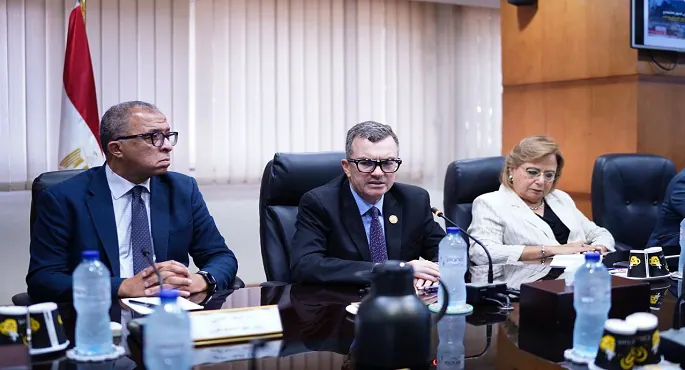
Egyptian Minister of Planning and Economic Development, Dr. Ahmed Rustom, met with a group of economic experts, academics, and members of the House of Representatives and Senate to discuss the country's economic performance indicators and the 2026-2027 economic and social development plan. The meeting was held at the National Institute of Planning, and attendees included Dr. Ashraf Al-Arabi, head of the institute, and several other prominent economists and former ministers.
During the meeting, Dr. Rustom reviewed the current state of the Egyptian economy, highlighting its ability to adapt to global and regional geopolitical tensions. He reported that the economy achieved a 5.1% growth rate in the previous fiscal year, accompanied by a significant increase in the private sector's contribution to investments, reaching 57.7% of total investments.
The minister emphasized the importance of coordination between the government and the Central Bank of Egypt to ensure harmony between fiscal and monetary policies, aiming to curb inflation, reduce public debt, and promote comprehensive development. He also touched on the main features of the National Economic Transformation Program, which is currently being prepared in line with President Abdel Fattah El-Sisi's directives.
According to Dr. Rustom, the program builds on previous reforms and aligns with existing strategies, such as the State Ownership Policy Document. Its primary objectives include consolidating financial sustainability, promoting competitive neutrality, and reducing the government's presence in specific sectors to make way for private investments.
The minister stressed that the ultimate goal of the program and all structural reforms is to improve the quality of life for citizens and have a direct positive impact on their living standards. The program aims to create a more favorable business environment, attract investments, and stimulate economic growth.
The meeting attendees, including former ministers and prominent economists, shared their insights and expertise to help shape the country's economic policies and development plans. The discussions focused on finding solutions to current economic challenges and identifying opportunities for growth and development.
The Egyptian government's efforts to promote economic development and improve living standards are ongoing, with a focus on implementing structural reforms and encouraging private sector participation. The National Economic Transformation Program is expected to play a key role in achieving these objectives and enhancing Egypt's economic competitiveness.
Key points
- The Egyptian economy achieved a 5.1% growth rate in the previous fiscal year.
- The private sector's contribution to investments reached 57.7% of total investments.
- The National Economic Transformation Program aims to promote financial sustainability, competitive neutrality, and reduce the government's presence in specific sectors.