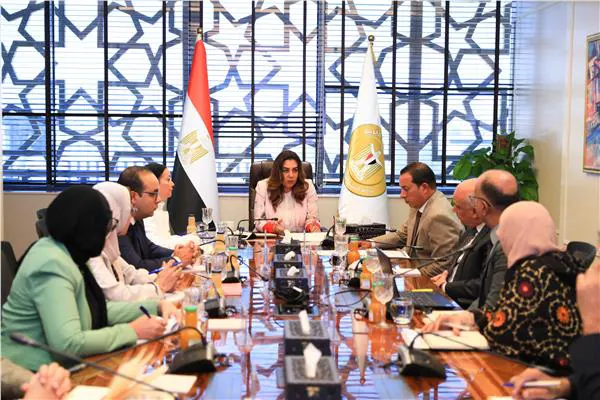
Egyptian Minister of Local Development and Environment, Manal Awad, recently chaired a meeting with the working team of the project to produce and use the beneficial microorganism material "EM". The project aims to utilize the applications of beneficial microorganisms in agricultural and environmental development. The meeting was attended by several high-ranking officials from the ministry.
The project is a collaboration between the Ministry of Local Development and Environment and the Japanese research organization, EMRO. It started in Egypt in 2002 and focuses on using beneficial microorganisms to improve agricultural productivity and mitigate environmental issues. Minister Awad was briefed on the project's progress, including the production process and applications of the "EM" material.
The "EM" material consists of beneficial microorganisms that can be used in various sectors such as agriculture, industry, and environmental conservation. The minister was informed about the successful experiments and applications of the material in Egypt, particularly in wastewater treatment, waste management, and soil improvement. These applications aim to enhance water and soil quality, and support sustainable agricultural practices.
Minister Awad emphasized the importance of effective marketing and dissemination of information about the "EM" material to promote its benefits and applications. She instructed the team to develop a comprehensive plan to introduce the material to the public and relevant sectors, utilizing social media platforms, media outlets, and the ministry's channels.
The minister also stressed the need for trained technical personnel to handle the production and application of the "EM" material. She called for the establishment of a suitable site and laboratory for production, ensuring the necessary environment for high-quality production. A specialized committee will be formed to oversee the production, applications, and coordination with relevant authorities.
The project's working team reported that the current production capacity of "EM" material is approximately 500 tons per year. The project provides direct job opportunities and aims to support national goals such as water conservation, waste management, and sustainable agricultural development. The team also presented several successful experiments and applications of the material in improving soil fertility and supporting animal and fish farming.
Minister Awad instructed the team to prepare a periodic bulletin for governors to introduce the "EM" material, its benefits, and applications. The bulletin aims to promote the use of the material in addressing environmental challenges in various sectors. The minister also requested the team to identify the project's requirements, including production sites, equipment, and personnel, to facilitate the expansion of production and marketing of the "EM" material.
Key points
- Egypt's Minister of Local Development and Environment, Manal Awad, reviews progress of the beneficial microorganism technology project "EM" to address environmental challenges.